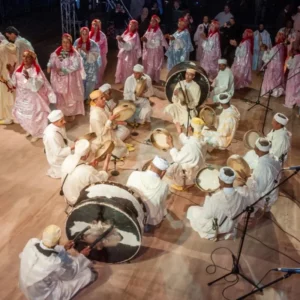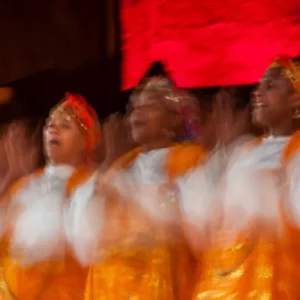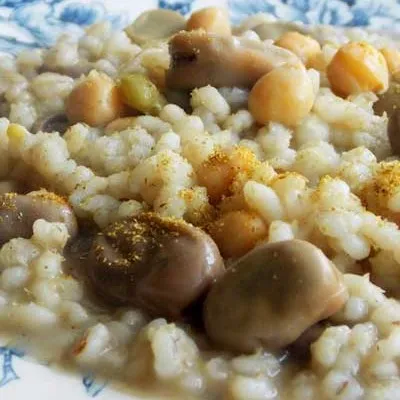
Every year around January 12-14, a date pit hides inside the tagoula bowls of Amazigh families — good luck for whoever finds it. That’s Yennayer, the Berber New Year: an agricultural feast older than the calendar that replaced it, and one that never quite disappeared.
A name from far away
The word “Yennayer” comes from the Latin Januarius, the same root as our January. That link points to old contact with the Julian calendar, brought by Rome and kept alive in Amazigh villages long after the Gregorian calendar took over elsewhere. Some trace the date back to the legendary coronation of the Amazigh king Chachnak, who became pharaoh of Egypt around 950 BCE — an origin still debated, but one that gives the feast a legitimacy of its own.
Since January 14, 2024, Yennayer has been a paid national holiday in Morocco, an official recognition the Amazigh movement had sought for years. The Berber calendar now counts year 2976; the next threshold, in January 2027, opens year 2977.
A feast of the land and renewal
As an agricultural feast, Yennayer celebrates fertility, renewal, and the prosperity to come above all else. Much like our January 1st, it’s a time for family gatherings, good wishes, and looking back on the year gone by. People treat it as a lucky day, good for weddings, engagements, and any fresh start.
The New Year table
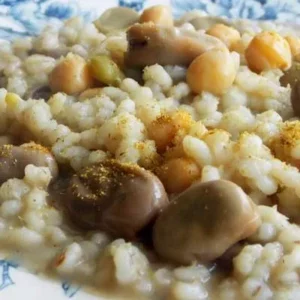
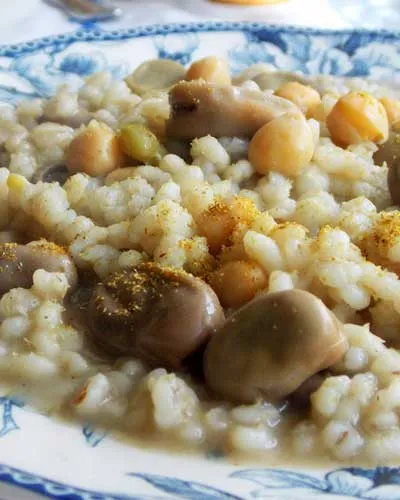
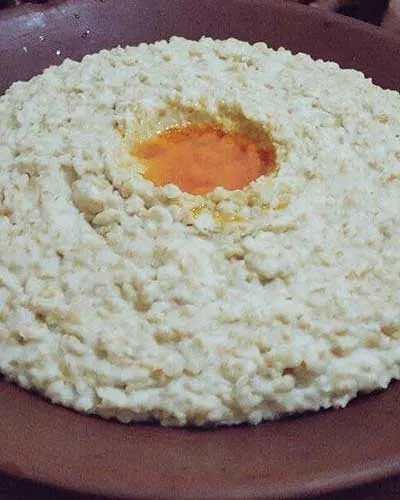
Food takes center stage in the celebrations. Orkimen, a thick soup of dried fava beans, wheat, and wild herbs, often opens the meal. Couscous, made for the occasion with seven vegetables, stands for abundance and balance. Tagoula, a rustic porridge of corn kernels enriched with butter, ghee, argan oil, and honey, closes the meal on flavors straight from the land.
A lucky bite
A date pit or almond piece often hides inside the Tagoula or the couscous. Whoever finds it in their bowl is said to carry luck for the whole year. In the old days, that person would even be trusted with the keys to the family granary — the agadir — a mark of confidence and shared blessing from the whole household.
What the table doesn’t tell you is everything that happens the night before and the morning after: a legend of borrowed days never returned, a couscous dumpling hung on the door and read by the wind, hearth stones renewed with spoken wishes. Émile Laoust recorded it all in 1920, valley by valley — worth the longer read.
Discover all articles: The Berber world
Sources
- Émile Laoust, Mots et choses berbères. Notes de linguistique et d’ethnographie, dialectes du Maroc, Challamel, 1920, chapitre VI « Le temps, l’atmosphère, le ciel », p. 181-201.