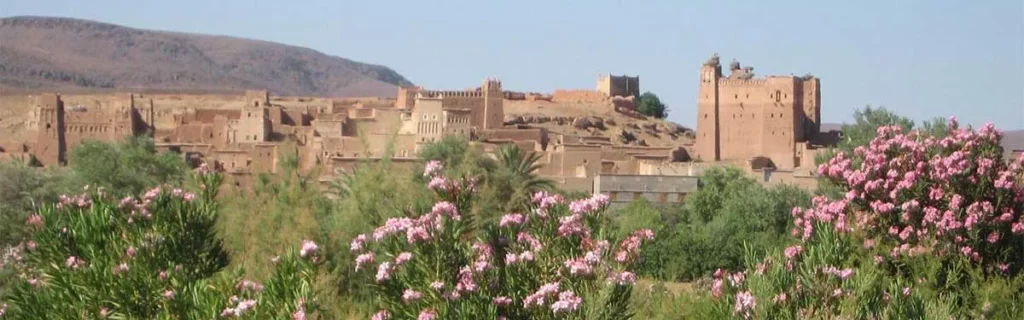
Tikirt belongs to those almost erased places whose ruins still have much to say. Once a fortified city in southern Morocco, admired by European explorers, it preserves the memory of an Amazigh world made of earth, mountains and routes, but also the memory of a once-important Jewish presence, fully woven into the life of the place.
Version française
The city’s lush gardens, irrigated by an elaborate network of seguias — traditional irrigation canals — provided abundant harvests and reflected the agricultural prosperity of the region.
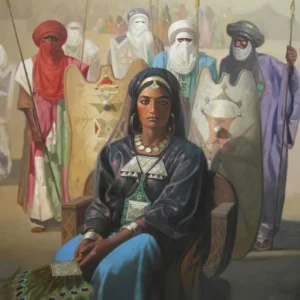
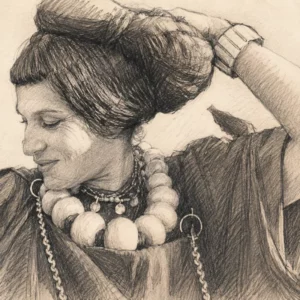
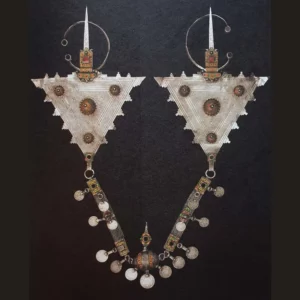
The women of Tikirt lived within this landscape of earth, gardens and mountains. They wore the traditional adornments of southern Morocco: amber and coral necklaces, bracelets, brooches and earrings. These Berber jewels expressed social status, family belonging and the rich cultural heritage of the region.
A city admired by European explorers
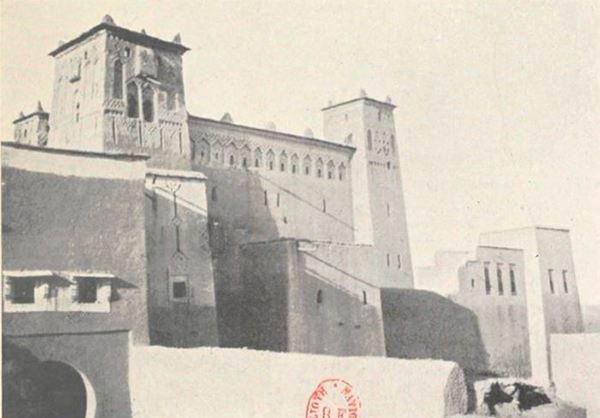
The splendour of Tikirt struck several European explorers.
René de Segonzac, in his work Au cœur de l’Atlas, mission au Maroc, 1904-1905, evokes a place surrounded by impressive mountain ranges:
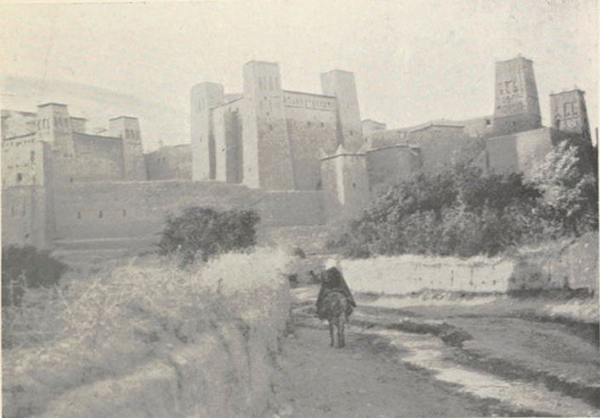
“I have seen nothing in all North Africa that can be compared to Tikirt. It is only a small town, but its tall houses give it a singular character of a medieval fortress.”
René de Segonzac
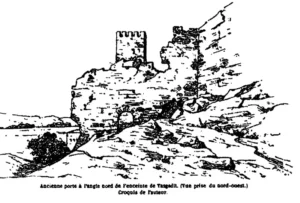
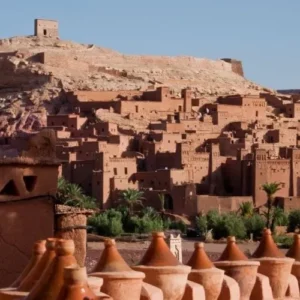
This impression did not come only from the presence of one fortified building. Tikirt was rather a kind of fortified city. An old testimony describes it as a settlement made up of several adjoining tighremts, with a maze of streets, small squares and passageways. Each notable family, each important tribal section, had, in a sense, its own fortress.
Tikirt was therefore not an isolated kasbah. It was a collective ensemble, an earthen architecture where dwelling, protection, family prestige and village life were closely intertwined.
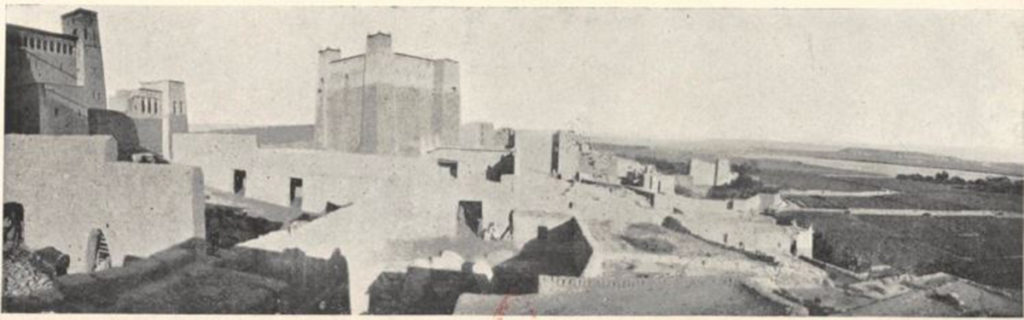
A few years earlier, Charles de Foucauld, in Reconnaissance au Maroc, based on his journey of 1883-1884, had already noted the strength of the site. He reports these words from the inhabitants:
“The mountains turn all around our country, say the inhabitants of Tikirt. Indeed, whichever way one looks, one sees only dark mountain masses. From Tikirt several remarkable peaks and passes can be distinguished: Djebel Anremer, Tizi en Telouet, Tizi n Tichka, Tizi n Tamanat, Djebel Tidili, Djebel Siroua.”
Charles de Foucauld
An integrated Jewish community
Tikirt was also home to a notable Jewish community.
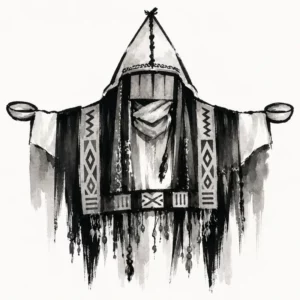
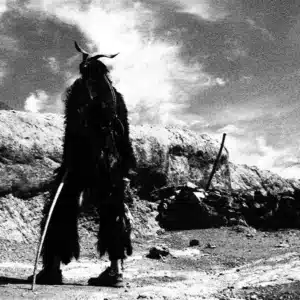
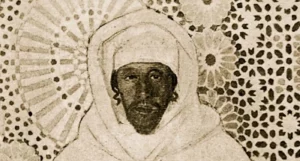
Photographs taken around 1935 by Jean Besancenot show a Jewish man and child from Tikirt wearing the akhnif, a large traditional black cloak. This document is precious, because it reminds us that the rural Jewish communities of southern Morocco shared part of the clothing and cultural practices of their Amazigh environment.
The Jewish presence in Morocco is ancient, with communities established for millennia, particularly in the South-East, including localities such as Tikirt.
Charles de Foucauld also mentions a significant anecdote in Reconnaissance au Maroc. He tells of meeting in Tikirt a young Jewish woman from Ouarzazate, married to a man from the village. He specifies that her husband had paid a large sum to take her with him.
Beyond the detail itself, this testimony reveals something essential: Tikirt was not a village closed in on itself. Links existed with Ouarzazate and with other localities of the South. Jewish families moved, formed alliances, traded and belonged to social and economic networks that extended well beyond the limits of a single ksar.
This Jewish memory of Tikirt must therefore be read as part of the history of the place. It recalls the ancient complexity of southern Morocco, made of neighbourhoods, exchanges, crafts, passages and multiple belongings.
Read also: The lost destiny of the Jews of South-Eastern Morocco
A commercial and cultural crossroads
Located at a strategic point, Tikirt served as a crossroads between the routes linking the High Atlas, the Siroua, Tazenakht and southern Morocco.
Merchants, craftsmen and travellers exchanged agricultural products, fabrics, precious objects, news and know-how. The city lived from this position in-between: neither entirely Atlas nor entirely Saharan, but placed on the routes that connected these worlds.
The pisé houses, the tighremts, the gates and the tightly gathered volumes protected the inhabitants and their wealth. They also gave Tikirt the powerful appearance that impressed explorers in the early twentieth century.
Read also: Sijilmassa, the mythical city that shone the true heart of the Maghreb
The decline and legacy of Tikirt
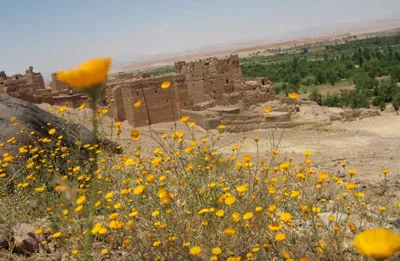
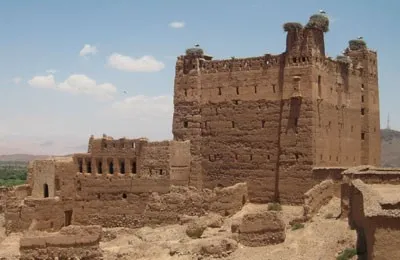
Despite its past greatness, Tikirt underwent a gradual decline. Trade routes changed. Centres of power shifted. Rural exodus emptied part of the old villages. The earthen walls, no longer maintained, gradually yielded to wind, rain and time.
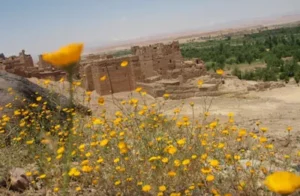
Today, the remains of Tikirt recall the splendour of an almost vanished world.
But these ruins are not only the remains of a fortress. They bear witness to Amazigh architectural genius, to the social organisation of old rural communities, and to the Jewish presence in the villages of southern Morocco.
Tikirt therefore deserves to be seen not as a simple forgotten place, but as one of those fragments of memory where Amazigh architecture, ancient routes, agricultural life, adornments, exchanges and the coexistence of communities meet.
It is also striking to compare the fate of Tikirt with that of nearby Aït Ben Haddou. While Aït Ben Haddou has become one of the great heritage emblems of southern Morocco, Tikirt remains almost invisible, although it was once a radiant city, admired by explorers and marked by a strong Jewish presence. Two neighbouring places, two very different memories: one now seen by the whole world, the other still barely emerging from oblivion.
Discover all articles: The berber world