Before becoming the powerful “Lords of the Atlas”, the El Glaoui were, in the mid-19th century, still only the ruling lineage of one Amazigh tribe among many, established around Telouet on one of the great caravan routes across the High Atlas. This first chapter in the Glaoua saga traces the origins of their rise and tells how, through tribal rivalries, service to the Makhzen and control of trade, the “little sparrow’s nest” began to dream of becoming an eagle’s eyrie.
The Glaoua Saga
- Part one: The sparrow takes flight.
- Part two: Madani El Glaoui, from caïd to grand vizier
- Part three: The turbulent beginnings of Thami El Glaoui’s rule
- Part four: Thami El Glaoui in the service of the French Protectorate, the Sultan—and himself
- Part five: The fall of the Lords of the Atlas and the end of Morocco’s caïdal system
Panorama
- Le caïd entre agent du Makhzen et chef de tribu.
- Telouet, lieu de brassage et point stratégique de commerce.
- Les premiers pas d’une petite tribu parmi d’autres.
- La fierté conquérante du chef de Telouet.
- Les dernières marches avant la victoire.
- L’envol avorté du petit moineau.
The Glaoua are an Amazigh tribe established around Telouet, on the southern slopes of the High Atlas. Their ruling lineage, the El Mezouari El Glaoui, lived in a modest kasbah sometimes known as the “little sparrow’s nest”. According to local tradition, the small bird was associated with providence and regarded as a sign of good fortune.
Yet this modest bird’s nest would eventually be transformed into an eagle’s eyrie.
From the second half of the 19th century onwards, the El Glaoui family embarked upon a long and arduous ascent towards power and wealth. From one generation to the next, its representatives established themselves as powerful servants of the Makhzen, Morocco’s system of government in which the central authority delegated extensive powers to provincial governors known as caïds.
In the case of the El Glaoui clan, this delegation of authority would eventually reach extraordinary proportions. Over the years, its leading members became known as the Lords of the Atlas. In times of peace as in times of war, the caïds of the Glaoua, like the heads of several other great caïdal families, became powerful masters who exercised authority over vast territories and the people who inhabited them.
The caïd: between Makhzen representative and tribal chief
The term Makhzen has carried different meanings according to the period. It may refer to the Sultan’s government, but also, more broadly, to the system through which authority was exercised over a country long composed of tribes and territories fiercely attached to their autonomy.
The word Makhzen derives from the Arabic مخزن, makhzan, meaning a place of storage or a storehouse, from the verb خزن, khazana, “to store”. The English word magazine ultimately shares the same Arabic origin.
The term originally referred to the place where a village community stored its food supplies. From the 17th century onwards, it came to designate the Treasury—the place where taxes were collected—and, by extension, those responsible for administering it. Over time, the name was applied to the entire governmental apparatus serving the Sultan.
The Sultan was regarded as Amir al-Mu’minin, the Commander of the Faithful. Around him, the Makhzen was organised through a central government composed of viziers, or ministers, and numerous officials recruited from sharifian families claiming descent from the Prophet, as well as from families of scholars, merchants and warriors.
These officials were responsible for maintaining order, collecting taxes and acting as arbiters, particularly in disputes involving land and property.
In rural areas, authority was generally entrusted to a caïd appointed by the Sultan and assisted by a khalifa and several sheikhs.
The caïds received extensive powers from the central government. In practice, however, the Makhzen’s direct political, military and fiscal authority varied considerably from one region to another.
Moroccan history is often described through the opposition between the Bled el-Makhzen, the territories where the Sultan’s government exercised effective authority, and the Bled es-Siba, where tribes retained a greater degree of political and military autonomy.
This distinction should not be understood as a rigid division between an organised state and a “land of anarchy”. In many mountain and rural regions, the Sultan’s power was negotiated, intermittent or exercised through alliances, while his religious legitimacy and his role as an arbiter could still be recognised.
The expression Bled es-Siba, widely employed and simplified by French colonial historiography, therefore describes a far more complex political reality than the frequently used translation “land of anarchy” would suggest.
This situation often led the Sultans to appoint as caïd a man who already possessed recognised authority among the population concerned—generally the head of the dominant tribe.
Some caïds acquired immense power in the history of the country. Many fought against one another, while an even greater number made the accumulation of wealth their principal concern.
The Caïd the word derives from the Arabic قائد, qāʾid, meaning “commander”. In Morocco, it referred to a local governor appointed by the Sultan who could combine administrative, fiscal, judicial and military powers, while sometimes also serving as the leader of his own tribe.
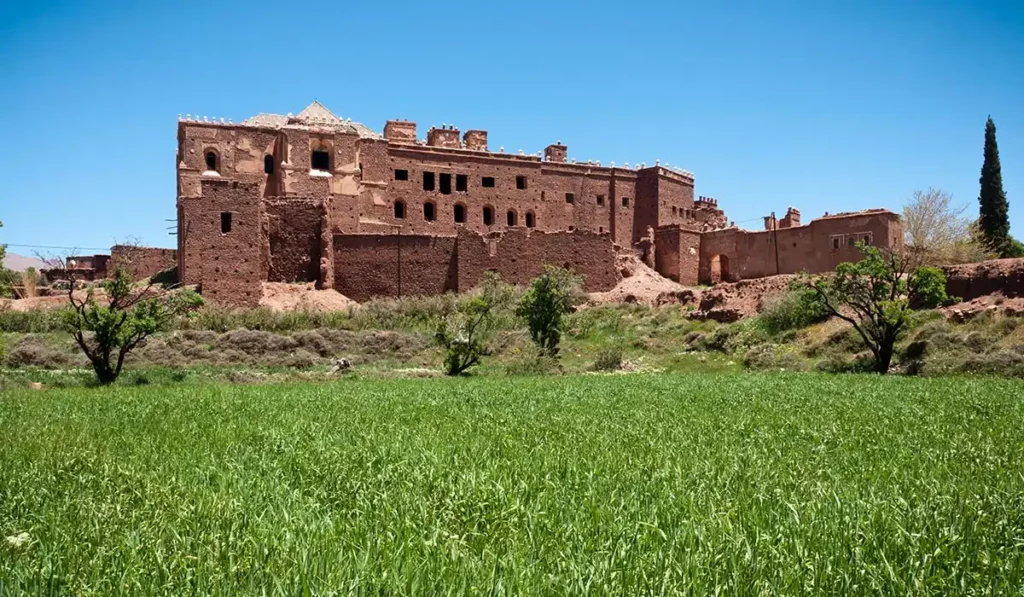
Telouet, a meeting place and strategic centre of trade
A large part of the High Atlas once belonged to the regions where the Makhzen’s direct authority remained limited or depended upon alliances with local powers.
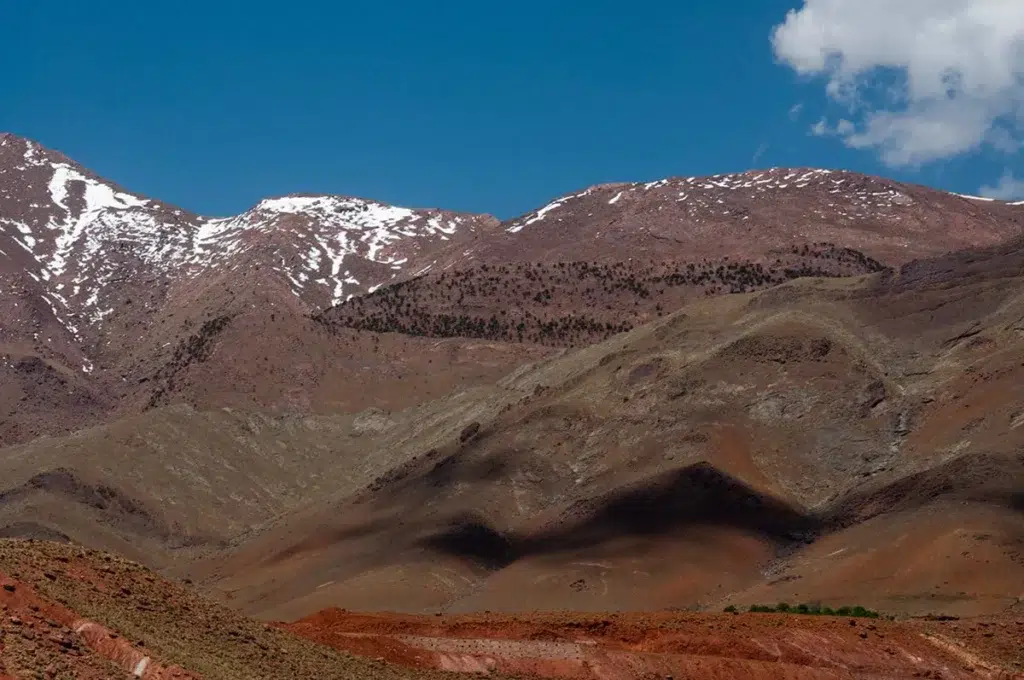
The immense Atlas mountain chain created a formidable natural barrier between Morocco’s imperial cities in the north and the pre-Saharan regions to the south—a world of mountains, valleys, rocky plateaux, oases and desert dunes. These vast territories had been inhabited for centuries by Amazigh communities.
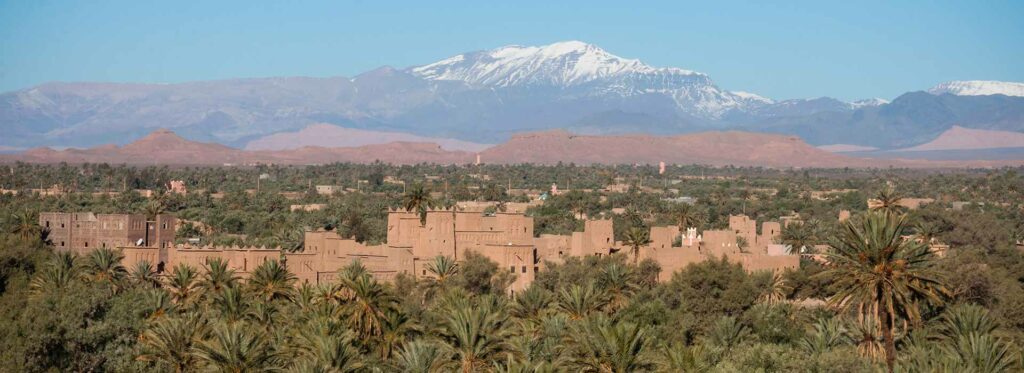
On the southern side of the High Atlas, at an altitude of approximately 1,870 metres, lies the small village of Telouet.
Its position made it strategically important. For centuries, commercial caravans crossed the mountains through the Telouet Pass, known as Tizi n’Telouet or Tizi n’Glaoua, at an altitude of around 2,400 metres.
The route through the Telouet Pass may already have formed an important crossroads during the Phoenician and Punic periods. It was known to merchants, geographers and travellers as the Gate of Deren, or the Gate of the Atlas.
The pass provided one of the principal routes between northern Morocco and the territories of the Drâa, Tafilalet, Dadès and Todgha, continuing towards the distant Bilad al-Sudan, the historic Arabic name given to the lands south of the Sahara.
Telouet was therefore not merely an isolated mountain village. It was a place of passage, exchange and commerce, where populations and political ambitions met.
Punic: the adjective describes what relates to the ancient Carthaginians. It derives from the Latin punicus or poenicus, itself derived from Poenus, meaning “Carthaginian”, and ultimately from the Greek Phoînix, which could refer to both the Phoenicians and the Carthaginians.
Read also : Telouet: Cradle and Stronghold of the Lords of the Atlas
The first steps of an Atlas tribe
The Glaoua—Igliwa in Amazigh—are a sedentary Amazigh tribe belonging to the Tachelhit-speaking area. Their historic territory extends across both sides of the main High Atlas ridge, particularly around Telouet, the Rdat Valley and the Asif Mellah.
The populations of this part of the High Atlas have been associated, according to different historical classifications, with the great Masmouda and Sanhaja Amazigh groupings. These affiliations should nevertheless be understood within a long history shaped by alliances, migrations and tribal recompositions.
The ruling lineage of the tribe was known as El Mezouari. The name derives from the Amazigh term amezwaru, meaning “the first”, the one who goes before, or the person who leads a particular function or community.
The El Glaoui had long been regarded as a Makhzen family serving the Alaouite dynasty, at least since the reign of Sultan Moulay Ismail, who ruled Morocco from 1672 to 1727.
One of their earliest ancestors mentioned in historical accounts was a man named Abdessadek. At that time, however, the lineage possessed neither great fame nor exceptional power.
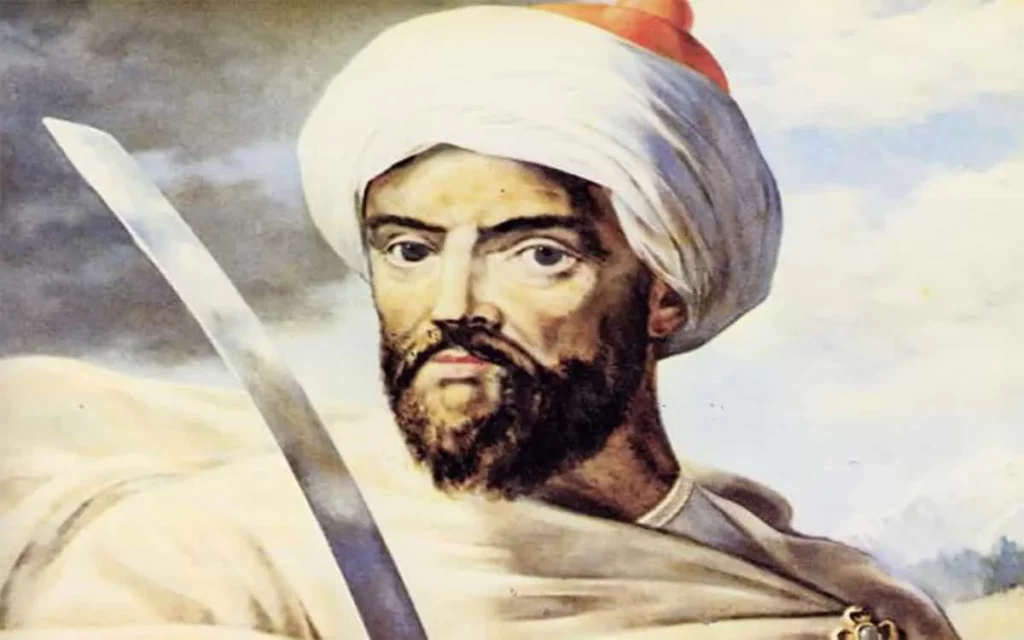
It was not until the first half of the 19th century that the family’s ascent towards power began.
The first step was taken by Hammou Amezouar El Glaoui, better known by the Arabic name Ahmed. His people appointed him amghar, or sheikh, making him the leader of the tribe around Telouet.
At the time, however, Telouet remained under the authority of the powerful caïd El Hachemi Zemrani of Demnate.
El Hachemi Zemrani belonged to a lineage associated with the Banu Maqil and originated from the douar of Zemrane, north-east of Marrakech. As a Makhzen caïd, he claimed longstanding authority over several High Atlas tribes, including the Glaoua, Ghoujdama and Fetouaka. His influence extended as far as the Dadès Valley.
The Banu Maqil were Arab tribal groups that entered the Maghreb during the medieval period. Their different branches gradually spread across southern Algeria, Mauritania, Western Sahara and Morocco.
The modest Sheikh Ahmed married the daughter of another tribal leader, Ahmed Ben El Haj Mohamed, from the neighbouring village of Taghennouste. The marriage improved his social position, but it was above all Telouet’s strategic location that enabled him to increase his influence.
He was able to offer shelter, protection and security to the camel caravans travelling through the mountains.
In exchange for this protection, he required merchants to pay passage dues, providing him with a regular source of income. His position was further strengthened by the exploitation of a salt mine discovered at Adouz, near Telouet.
Ahmed’s increasingly prosperous activities soon caused concern to his father-in-law, Ahmed Ben El Haj, and provided his enemies within the clan with a pretext to drive him out of Telouet.
He sought refuge among the Aït Ounila, a neighbouring tribe traditionally hostile to his own people. Amghar Ahmed died during this forced exile in 1855.
The conquering pride of the chief of Telouet
During this exile on the banks of the Ounila River, Amghar Ahmed’s son was born.
He was named Mohamed Ben Hammou and grew up with a fierce determination to avenge the humiliation inflicted upon his father and reclaim the leadership of the tribe in the family stronghold of Telouet.
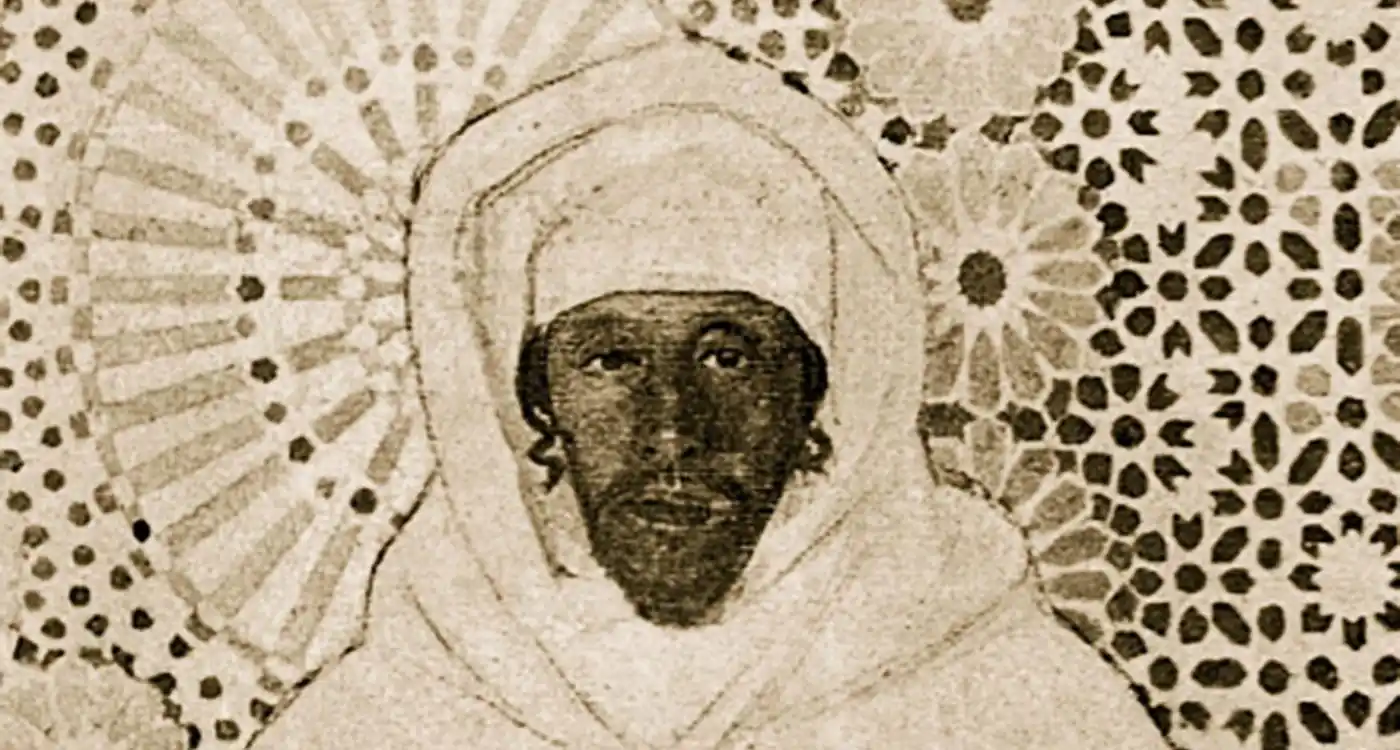
Mohamed Ben Hammou was a man of small stature. He therefore received the nickname Ibibet, the name of a small bird commonly translated here as “the little sparrow”.
Despite the apparent gentleness of this nickname, the young Mohamed became a determined war leader only a few years after his father’s death.
In 1858, he led an attack against the hamlet of Taghennouste. During the battle of Tighoufar Aït Rbaâ, his grandfather, Sheikh Ahmed Ben El Haj, was killed.
The fearless young chief believed he could now begin extending his power south of the Atlas. Once again, however, his ambitions came up against the powerful caïd of Demnate.
“Ibibat was a vigorous and tireless traveller. He had crossed the immense plains around Marrakech and cast many an envious glance at the riches that were lacking in his own country. From his modest position as a sheikh of the Atlas, he dreamed of replacing his powerful caïd, El Hachemi Zemrani of Demnate.”
Jacques Le Prévost — El Glaoui
Mohamed Ibibet’s ambition was nothing less than to unite the different components of the Glaoua tribe beneath a single banner and transform them into a major power in the High Atlas and beyond, following the example of the great caïdal families of the Mtougui and the Goundafa.
The Goundafa, known in Amazigh as the Ignifissen, formed a group of tribes established along the N’Fiss Valley in the High Atlas.
Long attached to their autonomy in the face of the Sultan’s authority, they would enter the Makhzen network during the final decades of the 19th century. Their leader, Si Ahmed, pledged allegiance to Sultan Moulay Hassan I, who appointed him caïd.
Following his death in 1885, his son Si Tayyeb Goundafi inherited the position and extended the family’s influence from the Haouz plain to the Souss.
The final steps before victory
Caught between these powerful caïds, Amghar Mohamed Ibibet nevertheless succeeded in attracting the attention of the central government, which was always eager to use tribal rivalries to preserve its own authority.
His audacity and determination in confronting his enemies made him a potential ally in the region.
Sultan Moulay Abderrahmane Ben Hicham, who ruled Morocco from 1822 to 1859, appointed him Amghar n’Ufella, or supreme sheikh, over the tribes of Aït Telouet, Aït Ounila and Aït Tammante.
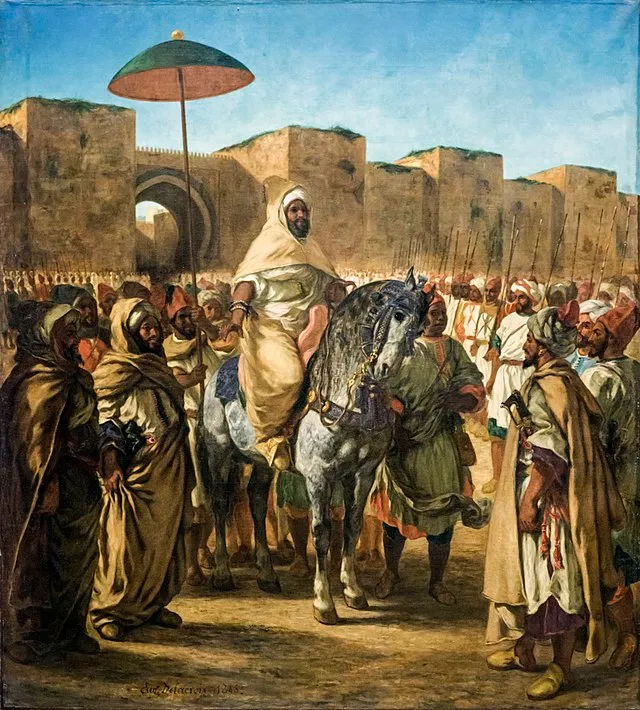
The supreme sheikh had little time to enjoy a title that seemed to fulfil his most intimate ambition.
Like his father Ahmed before him, he faced the fierce hostility of the Zemrani clan of Demnate. Following the death of El Hachemi Zemrani in 1858, his brother Omar succeeded him and made every effort to damage the reputation of his rival in Telouet and bring an end to his growing power.
Omar Zemrani persuaded the Sultan that Mohamed Ibibet was plotting against the sharifian government. He received authorisation to arrest him and bring him to trial.
But the little sparrow’s good fortune—and political instinct—had not deserted him.
The Sultan died in 1859, and Mohamed Ibibet immediately travelled to Marrakech to attend the ceremony of allegiance to the new sovereign, Moulay Mohammed Ben Abderrahmane, who would rule Morocco until 1873 and later become known as Mohammed IV.
During the ceremony, Sidi Boubker Ben Ali Ennaciri, the sheikh of the highly influential Nasiriyya zaouia of Tamegroute, completed the chief of Telouet’s strategy by interceding with the new Sultan on his behalf.
The Sultan decided to pardon Amghar Mohamed El Glaoui. In 1864, he raised him to the rank of Makhzen caïd and placed the tribes of the Aït Ouaouzguite confederation under his command.
Mohamed Ibibet’s hour of glory had arrived.
He used his new position to build a kasbah beside the older stronghold in Telouet. He then embarked upon a policy of expansion towards south-eastern Morocco.
His first major objective was to take control of the Kasbah of Taourirt, in present-day Ouarzazate. Like Telouet, Taourirt occupied a strategic position from which the caravan routes of the South could be controlled.
To achieve this, Mohamed formed alliances with the leaders of several tribes around Ouarzazate. In 1877, he succeeded in taking Taourirt and drove out Sheikh Mohamed Ben Abdellah.
This important conquest gave him control over commercial activity at another major crossroads. From Taourirt, routes led towards the Drâa Valley and the great oasis of Skoura, as well as towards the Dadès and Todgha valleys.
Amghar Mohamed Ibibet then attempted to use Taourirt’s central position to fight the tribes of the South that resisted the Makhzen, including that of his longstanding rival, the powerful Amghar Mohamed Zanifi of Tazenakht.
Proud of his recent promotion to the rank of Makhzen caïd, he set himself the ambition of bringing the independent tribes of the South under the Sultan’s authority.
This undertaking anticipated, in an entirely different context and on a far greater scale, the campaign that French colonial forces would pursue several decades later under the name of “pacification”.
The sparrow’s interrupted flight
The ambition proved too great for a small sparrow that already imagined itself an eagle.
Mohamed Ben Hammou El Glaoui made the mistake of overestimating his strength. Above all, he attempted to move faster than the political realities of late 19th-century Morocco would allow, at a time when tribal pride and competing ambitions remained exceptionally powerful.
His campaigns required considerable financial resources. He believed he could impose heavy charges and new levies upon the other tribes of the Aït Ouaouzguite confederation, as well as upon the Aït Zineb and the inhabitants of Tikirt, Ikhzamen and Ouarzazate.
These demands provoked the indignation of their leaders.
They quickly joined together in a coalition known as the Allies of Tagouzoult. Local tradition associates the name Tagouzoult with the idea of courage or bravery.
Their objective was to restrain the excesses of the chief of the small mountain settlement of Telouet.
Unable to defeat the forces united against him, Mohamed Ibibet abandoned his campaign and withdrew to his stronghold.
He now considered it wiser to consolidate his commercial activities in the High Atlas.
He revived the Monday souk at Ighil n’Oubiane, which had originally been established by his father.
He also built a new caravanserai to strengthen his control over caravans arriving from the Tizi n’Telouet Pass. A second market was established on Thursdays at Zrekten, together with another caravanserai.
From his small village beneath the immense mountains, Amghar Mohamed Ben Hammou El Glaoui—Ibibet—had surrendered himself to the dream of the Atlas.
He had imagined that the name of his clan, the name of the Glaoua, might one day command the countless tribes of Morocco.
Destiny decided otherwise and compelled him to be patient.
“Within the paternal kasbah built on the Telouet plateau, which soon became an imposing fortress, the ‘little sparrow’ of Telouet brought an otherwise unremarkable life to an end in 1888.”
Jacques Le Prévost — El Glaoui
Yet the destiny of the Glaoua was like an Amazigh carpet whose splendour emerged thread by thread.
Just as Mohamed Ben Hammou had sought to restore the pride of his own father, Sheikh Ahmed, and raise the family name still higher, his dream of power would be inherited by two sons of an entirely different stature: the elder, Madani, and the younger, Thami.
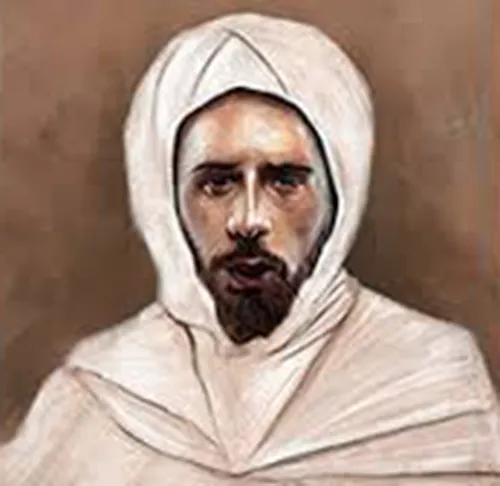
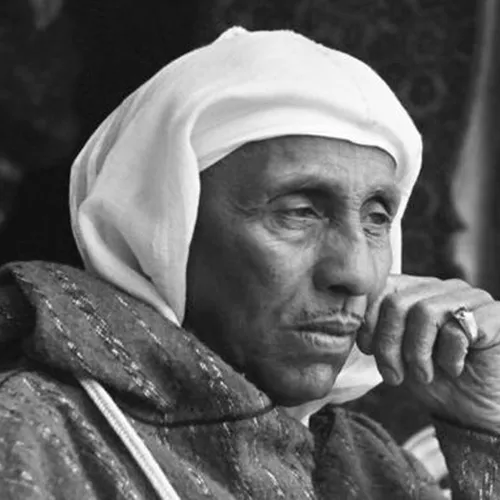
At his death, Mohamed left his eldest son, Madani El Mezouari El Glaoui, an established authority and a considerable fortune.
This inheritance would enable Madani to rise to the highest levels of the Makhzen and eventually obtain the most prestigious office available: that of Grand Vizier to the Sultan.
In the heart of his younger son, Thami El Mezouari El Glaoui, Mohamed also planted the seed of the ambition he had carried within him from the beginning.
It held the promise that one day, at last, the sparrow would become an eagle.
Read also : The lost destiny of Jews from South East Morocco
Key takeaways
- The Glaoua are an important Tachelhit-speaking Amazigh tribe whose historic territory extends across the High Atlas around Telouet.
- The El Mezouari El Glaoui were the ruling lineage of the Glaoua tribe, rather than a separate tribe.
- The family’s rise was closely linked to Telouet’s strategic position on a major caravan route between Marrakech and southern Morocco.
- Mohamed Ben Hammou El Glaoui, known as Ibibet, strengthened the political and commercial power of his lineage during the 19th century.
- His appointment as a Makhzen caïd in 1864 marked a decisive turning point in the history of the Glaoua.
- Although his first attempts at territorial expansion met strong resistance, they laid the foundations for the later rise of his sons, Madani and Thami El Glaoui.
- The history of the Glaoua reveals the complex relationships between tribal authority, trade, the great caïdal families and the Moroccan Makhzen before the Protectorate.