Taghonja is one of those ancient rites in which the Amazigh world reveals its intimate relationship with water, earth and the seasons. Behind the small doll carried in procession lies an essential hope: to bring the rain back when drought threatens the life of villages.
Anzar, the rain god
This rite is rooted in the myth of Anzar. In pre-Islamic Amazigh belief, Anzar was the god of the sky, water, rivers, seas, streams and springs — often called Aglid n Ugfur, meaning “king of the rain.” For the prehistorian Gabriel Camps and linguist Salem Chaker, who devote an entry to him in the Encyclopédie berbère, Anzar is above all a principle of fertility: a life-giving force that strengthens vegetation and ensures the growth of herds.
But behind the god lies a love story. According to the legend, Anzar fell in love with a young woman of extraordinary beauty who was accustomed to bathing in a silver-reflecting river. Each time he drew near, she fled — and Anzar, wounded, withdrew, withholding his rain and letting the land wither. He issued a threat: “Like lightning I have split the vast sky, O Star brighter than all others — give me the treasure that is yours, or I will deprive you of this water.” Out of love for her people, the young woman finally yielded. And since that day, when rain falls, legend says she appears in the sky as a rainbow — Tislit n Unzar, the wife of Anzar.
The doll and her name
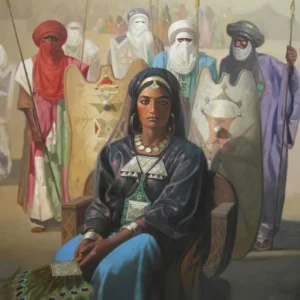
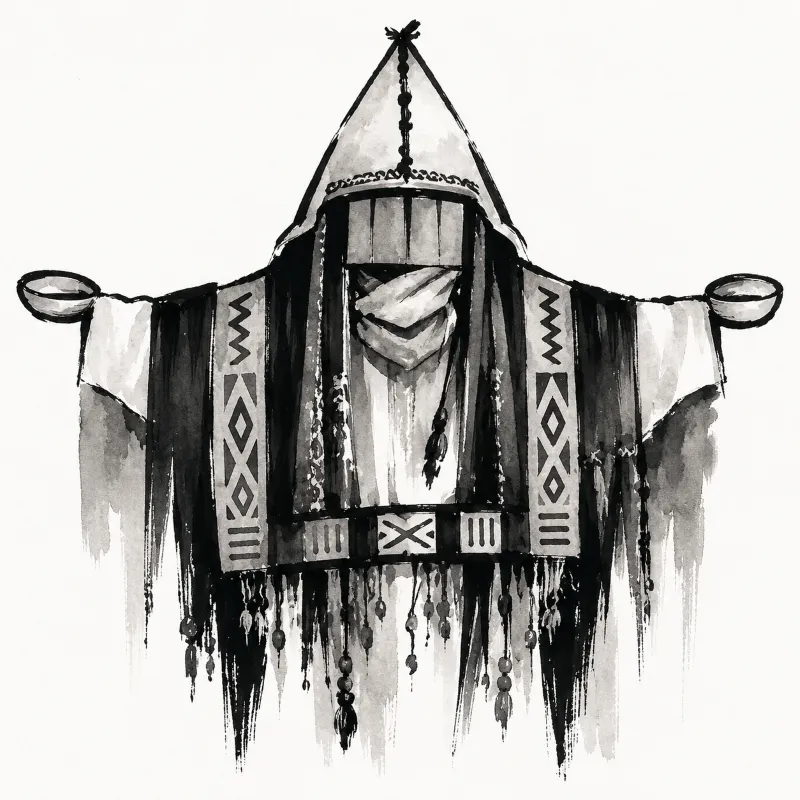
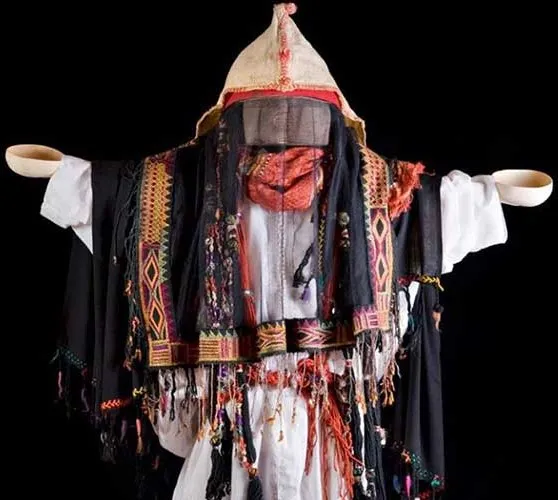
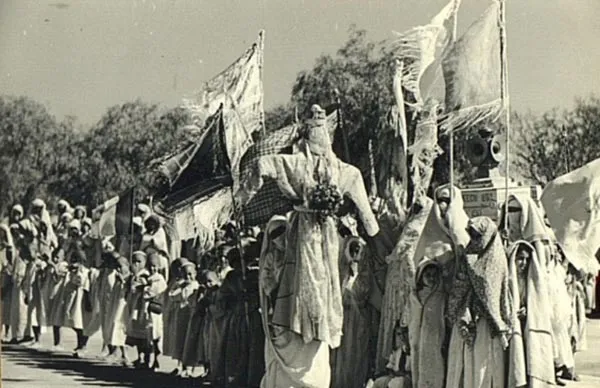
It is this myth that the rite re-enacts each time drought threatens. The bride of Anzar — Tislit n Anzar in Tamazight — took the form of a doll dressed as a bride. A figure was fashioned from rags wound around a wooden ladle or pestle, with two smaller spoons as arms, placed to receive and hold the longed-for rainwater. In some places, such as Tabelbala in the Algerian Saoura, a proper garment was cut and sewn around this wooden frame, completed with necklaces and bracelets — leaving no doubt that what was being enacted was a wedding ceremony.
She was called Taghonja, a name that comes from tlaghnja, meaning “the ladle” or “the soup spoon” — doubly symbolic, both as a vessel for the expected water and as an object tied to food and domestic life. She was adorned with henna and jewellery. In some Rif variants, a winnowing fork served in place of the ladle — another sacred vessel by virtue of its role at harvest time.
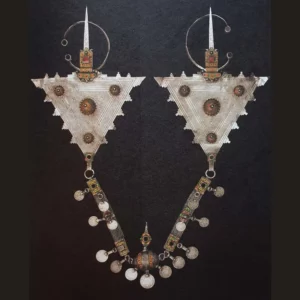
Read also : The berber fibula: between tradition and symbol
The procession
When the time came, the most respected woman in the village — sometimes called the qibla, the keeper of ancient knowledge — prepared the bride’s toilette. She was not permitted to weep during this preparation, lest it suggest she was giving the bride to Anzar with a reluctant heart. She then lifted the doll onto her back to open the procession.
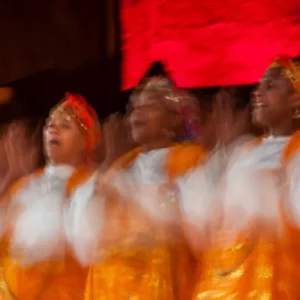
Accompanied by the children, the women walked through the village lanes chanting prayers and invocations to call the rain:
A tggunja, a morrja ! A Rabbi auwi-d anzar.
“O Taghonja, O mother of hope! O God, bring us rain.”
The doll was sprinkled with water along the way. At each threshold the procession passed, households poured water over the participants’ heads, aiming especially for the bride. They offered semolina, flour, meat and fat. With these gifts, the women prepared a communal meal, shared near a shrine, a riverbed, a threshing floor or the crest of a hill. The ceremony ended with a prayer imploring the return of Anzar — who on this day bore another name: Argaz n Taghonja, the husband of Taghonja.
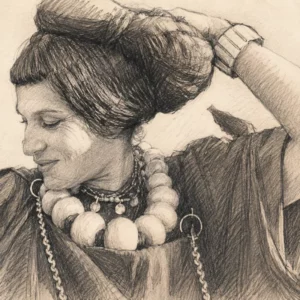
Read also : The art of women’s hairstyles among the Aït Atta of southern Morocco
A pan-Maghrebi rite
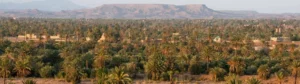
This tradition has been recorded across the Rif, Kabylia, the Atlas mountains and the Aurès range. Other traces of it have been found in the pre-Saharan region around Merzouga, among the Aït Khebbach. Whether the figure is called Taghonja, Tarenza, Boughenja or Tislit n waman — “the bride of water” — the gesture remains the same: a community that symbolically offers a bride to the sky, so that the sky may return the rain.
This rite speaks volumes about the ancient relationship of Amazigh societies with water. Rain here is not merely a natural phenomenon. It is blessing, fertility, the return of life to dry earth. And marriage — that central figure of alliance and transmission — becomes the universal language through which people address the heavens.
With time, the rite was gradually blended with prayers addressed to God. Though rooted in an ancient cult dedicated to Anzar, today the ritual is largely Islamicised: the communal meal is offered as sadaqa — an act of Islamic charity — and the procession often winds past the shrines of saints in search of their baraka. Yet behind this Islamicised form, the trace of an older imagination endures: a world in which nature, women, children, song and the whole community participated together in the call for water.
Taghonja is therefore not simply a doll carried in procession. She is the little bride of rain, the fragile face of a collective hope. And when at last a rainbow appears above the ridgelines, it is she who is recognised in the sky — the bride who consented, and whom the earth thanks.
Explore all articles : The Berber world