Skoura palm grove: an oasis of gardens, kasbahs and memories
One of the most expansive oases in southern Morocco, where date palms, earthen kasbahs and oasis traditions compose a landscape shaped by water over centuries.
Skoura is not a place you pass through. It is an oasis you take the time to read — the way you read a face. Twenty years of living in southeastern Morocco have taught us this: oases do not give up their secrets to those in a hurry. You have to stop beside a canal, accept the tea someone offers you, listen to what an elder has to say about water, about palms, and about those who have left. Only then does Skoura become something more than a landscape: a living memory.
Why visit Skoura?
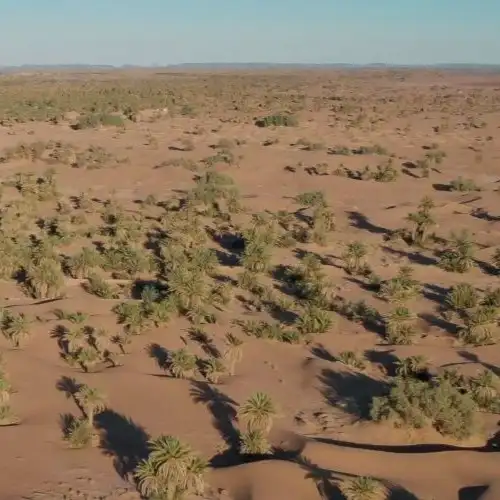
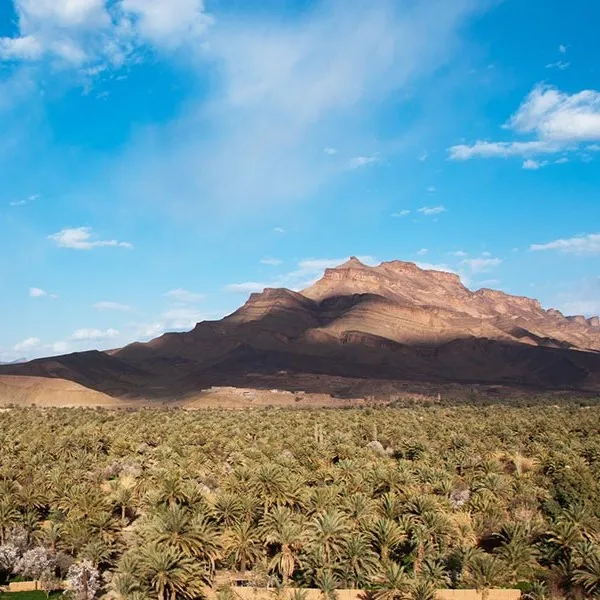
Skoura palm grove ranks among the most beautiful oases in southern Morocco. Across more than 25 km², thousands of date palms, olive trees, almond trees and pomegranate trees compose a verdant landscape that stands in striking contrast to the arid terrain surrounding it. Water flowing through an age-old network of channels has sustained fertile gardens at the heart of a desert environment for centuries.
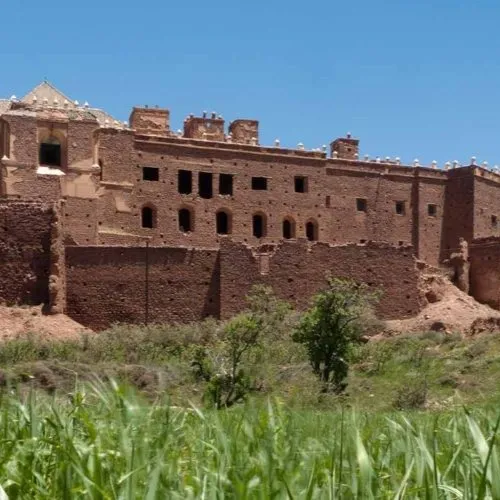
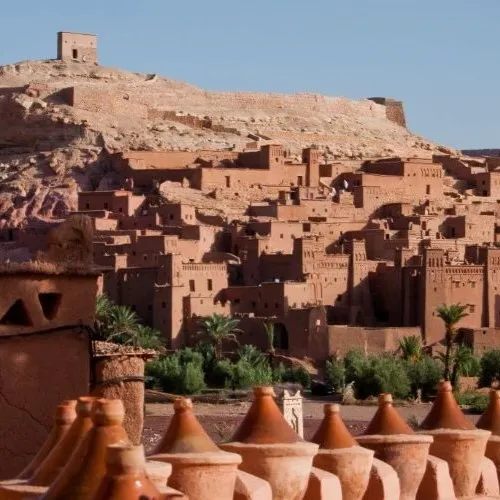
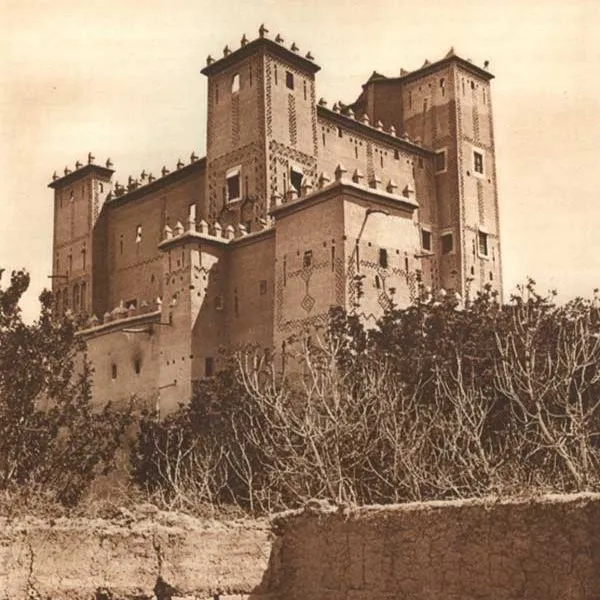
But Skoura is more than its vegetation. Towering earthen kasbahs emerge from among the palm trees, bearing witness to the oasis’s former prosperity. The most celebrated is Kasbah Amridil, one of the iconic monuments of southern Morocco — though several other fortresses are equally worthy of attention for their architecture and their stories.
Skoura is also a place of encounters and memory. Amazigh, Arab and Jewish communities lived side by side here for generations, leaving their mark in the architecture, the craft traditions, the local customs and in certain places that remain visible to this day.
Between irrigated gardens, architectural heritage and layered cultural histories, Skoura palm grove offers one of the richest and most authentic discoveries in the Ouarzazate region.
What to do in the Skoura palm grove?
Walking through the palm grove
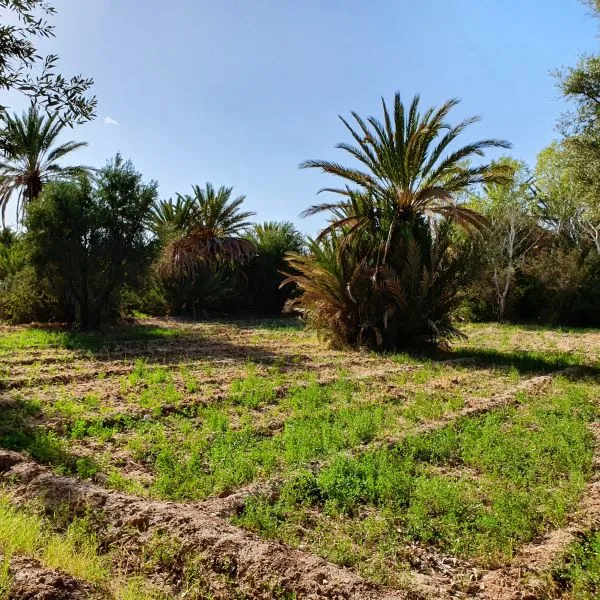
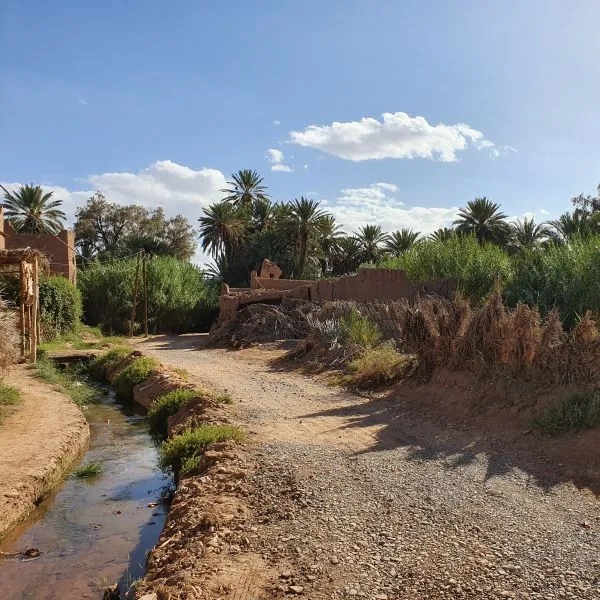
The tracks that wind through the oasis invite you to discover its gardens, irrigation channels and small villages scattered among the palms — as well as earthen kasbahs, most of them long abandoned and slowly returning to the earth. A walk on foot or by bicycle is the finest way to take in the gentle atmosphere of the place.
Visiting Kasbah Amridil
Probably the most famous kasbah in the oasis — once depicted on the 50-dirham banknote — Kasbah Amridil is well preserved and offers a clear window onto traditional earthen architecture and the domestic life of Skoura’s former great families.
Entrance to the kasbah is ticketed.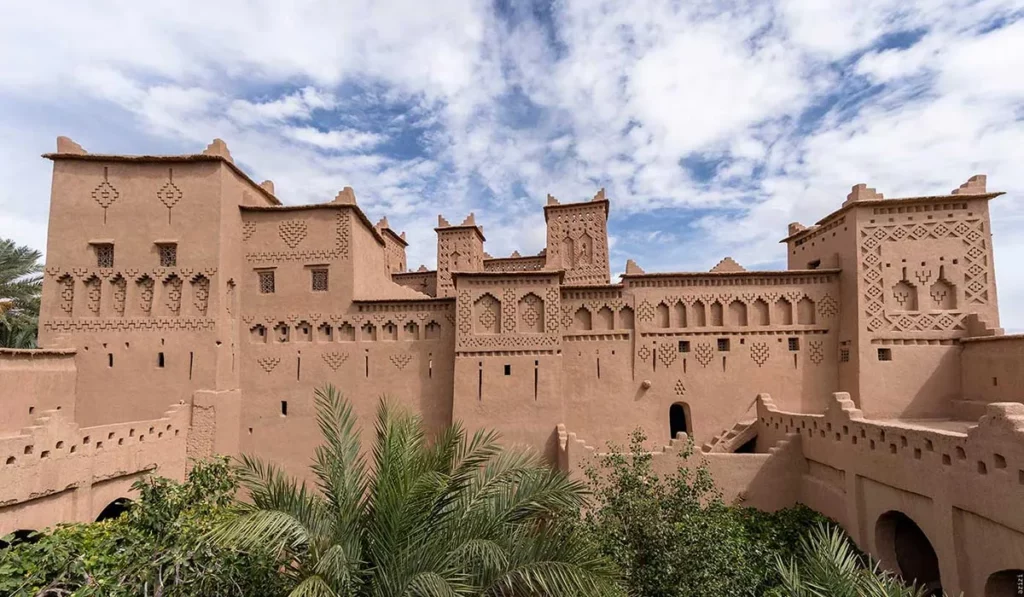
Exploring Skoura’s weekly souk
From the early hours of the morning, merchants and customers converge from surrounding villages — Toundoute, Imi N’Oulaoune and beyond — to trade a wealth of goods: fruit, vegetables, spices, textiles, local crafts and livestock. The market offers genuine immersion in daily local life and a culturally rich experience.
Traditional irrigation systems
Water is the very foundation of Skoura’s palm grove. In certain parts of the oasis it is still possible to observe the ancient irrigation networks that continue to feed the gardens today. Channels, water-distribution structures and underground galleries all attest to a form of know-how developed over centuries to sustain life in an arid land.
Read also : The palm grove of Skoura, the quintessential oasis
Traces of Jewish memory in Skoura
Skoura’s palm grove still carries visible traces of its former Jewish community, which was long woven into the economic and social fabric of the oasis. As in many oases across southeastern Morocco, Jewish communities played a significant role in trade, craftsmanship and commerce with the surrounding tribes.
Although much of this presence faded with the departures of the twentieth century, certain vestiges remain visible to the attentive visitor. These include former mellahs, former residential quarters, a Jewish cemetery and various architectural details that bear witness to this memory.
This history is a reminder that Skoura was always far more than a farming oasis. It was also a space of coexistence between Amazigh, Arab and Jewish populations, bound together by complex forms of economic, social and cultural interdependence.
Today, these often discreet traces contribute to the singular depth of Skoura. They invite a different way of looking at the oasis: behind the beauty of the palms and the kasbahs lies the memory of a shared life that has left a lasting mark on the history of southern Morocco.
What to look for: former mellahs; the old cemetery; El Hara (the communal space for celebrations); architectural motifsRead also : The lost destiny of Jews from South East Morocco
Villages and traditional kasbahs
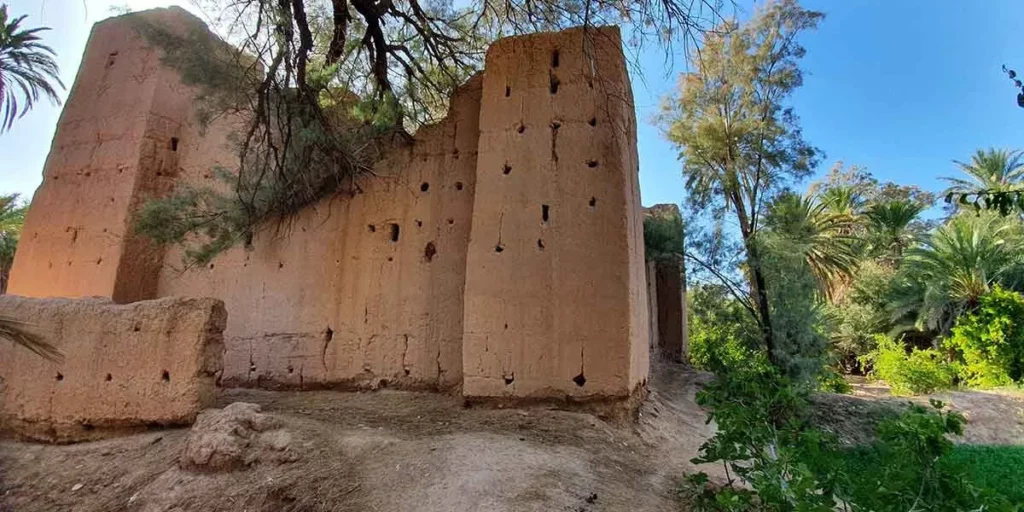
Beyond the celebrated Kasbah Amridil, Skoura’s palm grove shelters numerous traditional villages and former pisé kasbahs scattered throughout the gardens. Following the oasis tracks, the visitor gradually uncovers this earthen architecture — testimony to the ancient organisation of oasis life, balancing shelter, agriculture and defence. Some kasbahs appear at the bend of a canal or behind a curtain of palms, offering at every turn a new way of reading the landscape.
This activity requires the presence of a local guide.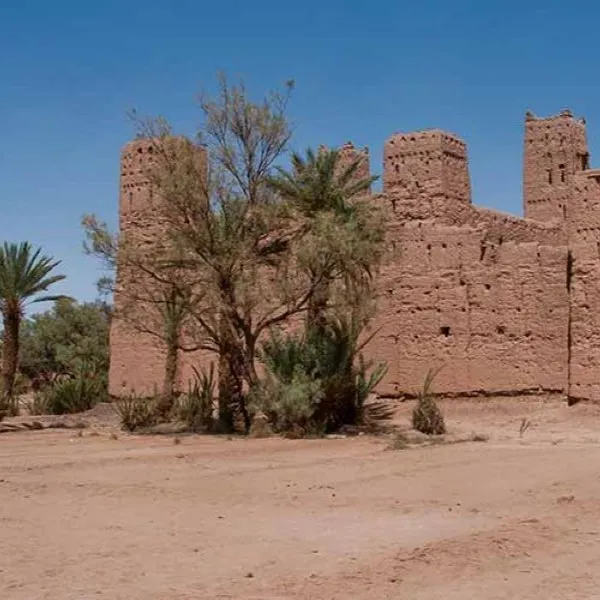
Read also : The oasis bears the seeds of tomorrow’s Morocco, and of the world
Getting to Skoura
From Ouarzazate
Skoura lies approximately 40 km east of Ouarzazate, along the national road N10 towards Tinghir and Errachidia. The drive takes around 40 to 45 minutes and presents no particular difficulty.
Shared taxis (grands taxis) are also available from Ouarzazate’s central station.
From Marrakech
From Marrakech, allow approximately 4.5 to 5 hours by road, crossing the Tizi n’Tichka pass, continuing through Ouarzazate and then east along the N10 to Skoura. This stage fits naturally into a broader itinerary through the oases and valleys of southern Morocco.
Getting around the palm grove
A car gives easy access to Skoura, though some tracks inside the palm grove are narrow or unpaved. To explore the most rewarding areas — kasbahs, gardens and traditional irrigation systems — travelling on foot, by bicycle or with a local guide is often the better choice.
The palm grove is large and it is easy to lose your way. A guide is strongly recommended. Cycling is an excellent way to get around.Beyond Skoura
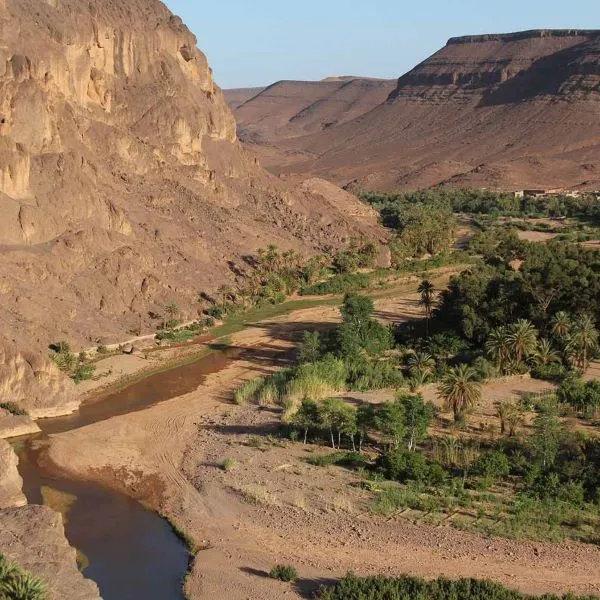
Skoura’s palm grove is only one doorway into the fascinating world of southeastern Morocco’s oases. Other oases, each with their own distinct character, punctuate the valleys and foothills of the Atlas: the Fint oasis with its striking mineral landscapes, Agdz and the Drâa Valley with its immense palm groves, and further south Zagora, a former caravan staging post at the edge of the desert.
With a Moroccan guide, it is possible to set out on an immersion of one day or several days through these oasis worlds: irrigated gardens, earthen villages, ancestral water systems and living ways of life. A different way of discovering southern Morocco — close to its landscapes and its people.
For more informations : contactez-nous
Planning a stay in Skoura? A question, need information?
Use the contact form — we will be happy to help.