Ksar of Aït Ben Haddou: the earthen village that became an icon
Overlooking the Ounila valley, Aït Ben Haddou is the most famous ksar in southern Morocco and a UNESCO World Heritage Site. Behind its iconic earthen silhouette lies a historic place of settlement and exchange on the routes that once linked the pre-Saharan regions with Marrakesh.
Aït Ben Haddou sometimes suffers from its own fame. Many visitors see the ksar merely as a film set, walk quickly through its lanes and leave without ever truly encountering the village.
Instead, you need to give the site time in order to appreciate it fully. Entering through the gardens, stepping inside a family home, looking over the valley from the summit or simply waiting for the tour groups to leave is enough to change the way you see it.
The celebrated silhouette then becomes what it was before anything else: a living place organised around earth, water and exchange.
Why visit Aït Ben Haddou ?
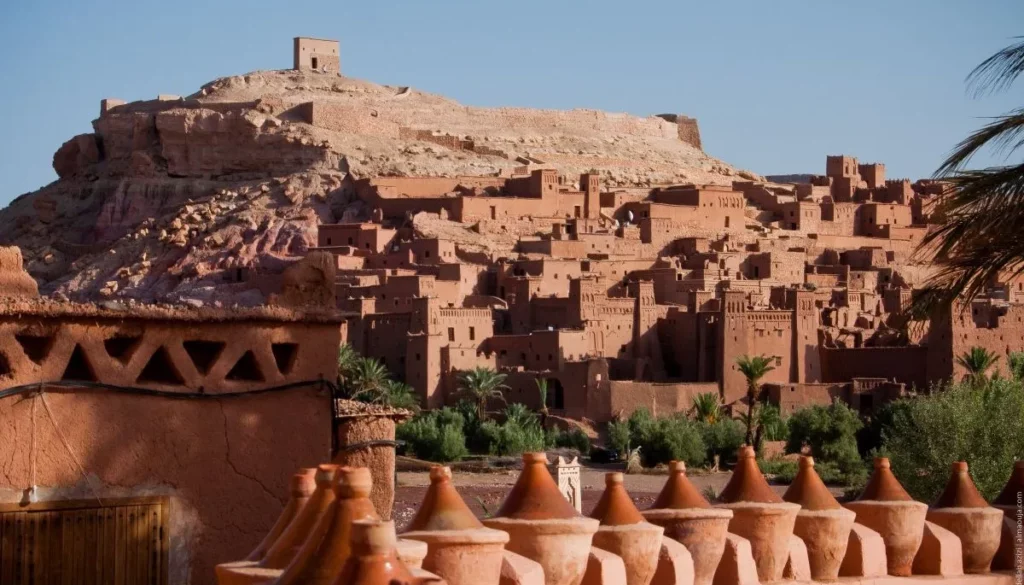
Aït Ben Haddou is a ksar: a fortified village made up of family homes, lanes, towers, defensive walls and communal spaces. It is therefore not a single kasbah, although this confusion remains common.
Built on high ground overlooking the riverbed and cultivated land, the village occupied a favourable position along an old route connecting the pre-Saharan regions with Marrakesh. It served at once as a place of residence, protection, storage and passage.
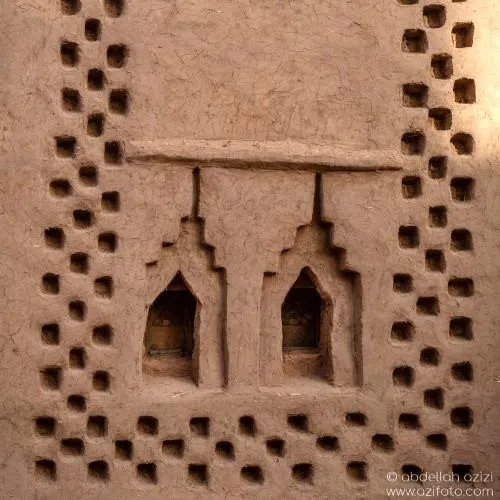
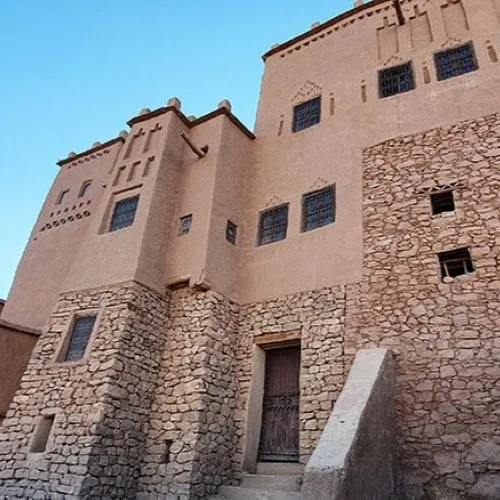
Its architecture combines rammed earth, unfired mud brick, timber and traditional rendering. The houses rise gradually up the hillside and are connected by narrow, sometimes covered lanes. This dense organisation responded both to the demands of the climate and to the practical needs of community life.
The ksar’s inscription on the UNESCO World Heritage List in 1987, followed by its use as a filming location, contributed greatly to its international fame. Its true richness, however, lies in the insight it provides into an older way of inhabiting and organising the land.
Read more: Why is Aït Ben Haddou famous?
What to do in Aït Ben Haddou?
Enter by the pedestrian bridge or through the gardens
Two public routes lead into the ksar. The pedestrian bridge provides the most direct approach and the best-known view of the village. The path through the gardens reveals more gradually the relationship between the riverbed, cultivated land and earthen houses.
Taking one route on the way in and the other on the way back allows you to discover two complementary sides of the site.
Admission to the ksar is free.Read more: Why is it called Aït Ben Haddou?
Explore the lanes of the ksar
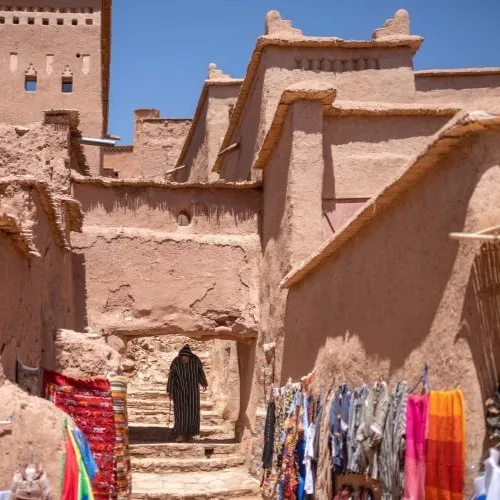
The visit continues through a network of narrow lanes, covered passages and small squares. Take the time to observe the doors, earthen walls, timber ceilings and openings overlooking the valley.
Several families also welcome visitors into their homes. These houses provide a better understanding of the internal organisation of traditional dwellings, while the entrance fees contribute directly to the maintenance of the heritage site.
Climb to the summit
The climb leads to the site of the former communal granary. From this high point, the layout of the village becomes easier to understand: the tightly grouped houses, defensive walls, gardens, riverbed and modern village on the opposite bank.
The path is uneven and offers little shade. It is best to avoid the hottest hours of the day.
Visit the Maison de l’Oralité
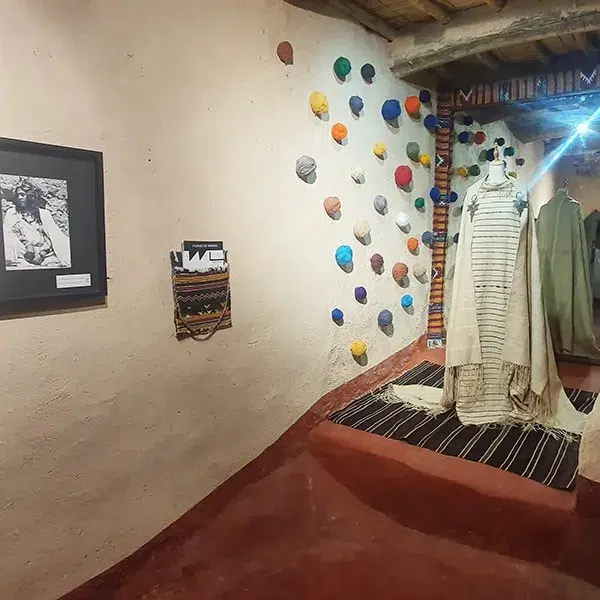
Housed in a restored residence, the Maison de l’Oralité presents the region’s oral traditions, local skills and Amazigh carpet-making heritage.
Still relatively little known, it offers a particularly interesting cultural perspective and allows visitors to look beyond the monument’s appearance alone.
Read more: The Maison de l’Oralité in the ksar of Aït Ben Haddou: a first in Morocco
Walk along the riverbed
The path below the village offers another perspective on the ksar and its agricultural surroundings. This walk is especially pleasant in the morning or when the late-afternoon light brings out the shapes and volumes of the buildings.
Near the pedestrian bridge, the Tawesna garden, run by a women’s cooperative from the village, provides a shaded setting in which to stop for tea or a meal.
Read also : Planning your visit to Aït Ben Haddou
Take a break at Tawesna restaurant
Located in a garden at the entrance to the ksar, Tawesna serves home-style cooking inspired by the region’s Amazigh culinary traditions. Its name means “know-how” in the local language.
The restaurant is run by a cooperative of women from Aït Ben Haddou. Beyond serving meals, this community-based initiative allows them to make use of their knowledge, develop an economic activity and participate fully in village life.
The restaurant is run by a cooperative of women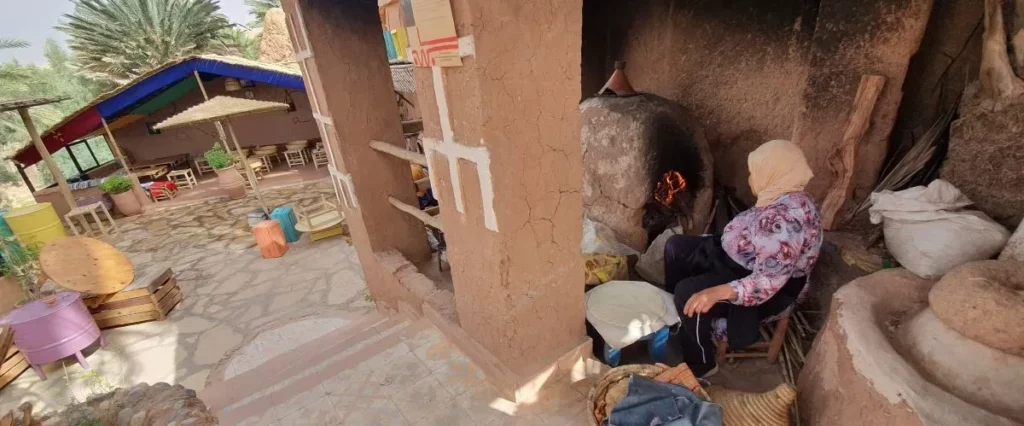
Getting to Aït Ben Haddou
From Ouarzazate
Aït Ben Haddou lies approximately 30 kilometres from Ouarzazate. Follow the N9 national road towards Marrakesh, then turn off at Tabourahte onto the P1506 provincial road. The final seven kilometres lead directly to the village.
The journey takes around 40 minutes. Shared taxis also travel to Aït Ben Haddou, generally with a change at Tabourahte.
From Marrakech
Aït Ben Haddou lies approximately 180 kilometres from Marrakesh, with a driving time of between three and a half and four hours.
The most direct route follows the N9 over the Tizi n’Tichka pass. A more rewarding alternative passes through Telouet and crosses the Ounila valley before reaching Aït Ben Haddou.
Getting around once you arrive
The ksar is explored entirely on foot. Its lanes and the climb towards the summit can be steep and uneven, so comfortable footwear is recommended.
Parking areas are available in the modern village, close to the main access points.
For more informations : contactez-nous
Read also : The oasis bears the seeds of tomorrow’s Morocco, and of the world
Where should you stay in Aït Ben Haddou?
Staying overnight allows you to discover the ksar before the day excursions arrive or after they have left. A small number of guesthouses are located inside the fortified village or directly opposite the site.
The surrounding villages offer a quieter atmosphere while remaining only a few minutes from Aït Ben Haddou. Travellers seeking a stay more closely connected with the landscapes, walking and local culture can also choose a guesthouse in the Ounila valley.
Ouarzazate is another practical option for travellers looking for a wider choice of hotels, restaurants and services.
For more informations : contactez-nous
Beyond Aït Ben Haddou
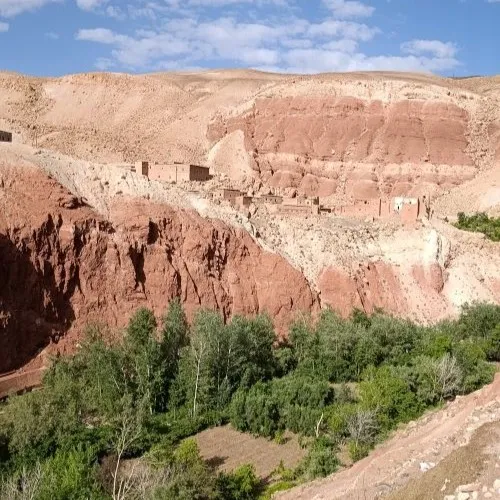
A visit to Aït Ben Haddou can be extended into the Ounila valley, one of the most remarkable routes in the region.
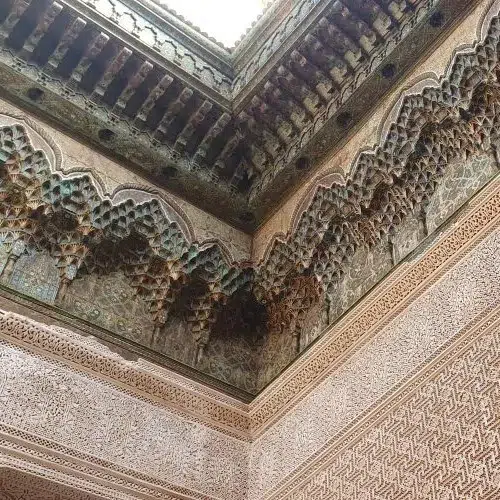
Travelling north towards Telouet, the road passes through mountain landscapes, gardens and several earthen villages. It eventually reaches the former Glaoui kasbah, whose decorated rooms bear witness to the past power of this family of influential caïds.
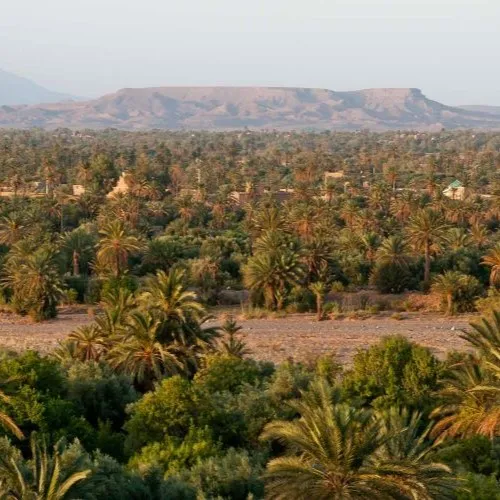
In the opposite direction, Ouarzazate offers the kasbah of Taourirt and the film studios. Fint oasis presents another side of the region, where a river, palm trees and villages meet beneath the surrounding hills.
Aït Ben Haddou should therefore not be regarded simply as a photographic stop, but as the starting point for a broader exploration of the Ounila valley and the southern High Atlas.
Planning a stay in Aït Ben Haddou ? A question, need information?
Use the contact form — we will be happy to help.
Read also : Once upon a time in the ksar of Aït Ben Haddou, four Christian princesses …