The word “Berber” is familiar. It appears in history books, travel guides, museums, carpet catalogues, accounts of the Maghreb, and even in everyday speech. It seems obvious, almost self-evident. And yet, behind this well-known word lies a long history of outside perceptions, translations, simplifications and acts of reappropriation.
For the peoples now commonly called Berbers did not always use this name for themselves. Many prefer the word Amazigh, plural Imazighen, to express a sense of belonging, a language, a memory and a way of being in the world.
Should we say Berber or Amazigh? Is the first term wrong? Is the second more accurate? The answer requires a journey through history. Understanding the origin of the word “Berber” is not only a matter of etymology. It means following the path of a name given from the outside, and then setting it beside a name carried from within.
A word born from an outside gaze
However, we should avoid an overly simple idea: the Greeks and Romans did not “invent” a precise name for the Berbers as a single people. The word “barbarian” was much broader. It could be applied to very different populations whenever they were perceived, from the centre of the Greek or Roman world, as foreign, peripheral or unassimilated.
From the beginning, then, the word “Berber” belongs to a history of perception. It did not first come from the peoples it designates. It is an exonym: a name given from the outside. That fact alone is not enough to condemn the word, but it does mean that it must be understood with care.
Naming a people is never neutral. The one who names also classifies, locates and interprets. He may also simplify. Behind an apparently stable word, there is often a great diversity of groups, languages, territories and local histories.
Before “the Berbers”: many ancient names
In Antiquity, the indigenous populations of North Africa appear under many names in Egyptian, Greek, Latin and Arab sources. We find, for example, the Libyans, the Lebu, the Mauri or Moors, the Numidians, the Gaetulians, the Garamantes and the Mazices.
These names are not simple synonyms. They do not always refer to the same groups, the same periods or the same regions. The Mauri are more closely associated with the far west of the ancient Maghreb. The Numidians refer to populations and kingdoms of central North Africa. The Garamantes are linked to Saharan spaces, especially the Fezzan. The Gaetulians often appear in the southern margins of the ancient world.
These names reveal something important: before being grouped under a general term such as “Berbers”, North African populations were perceived through many different names. These names depended on the viewpoint of those who wrote, traded, fought, governed or travelled.
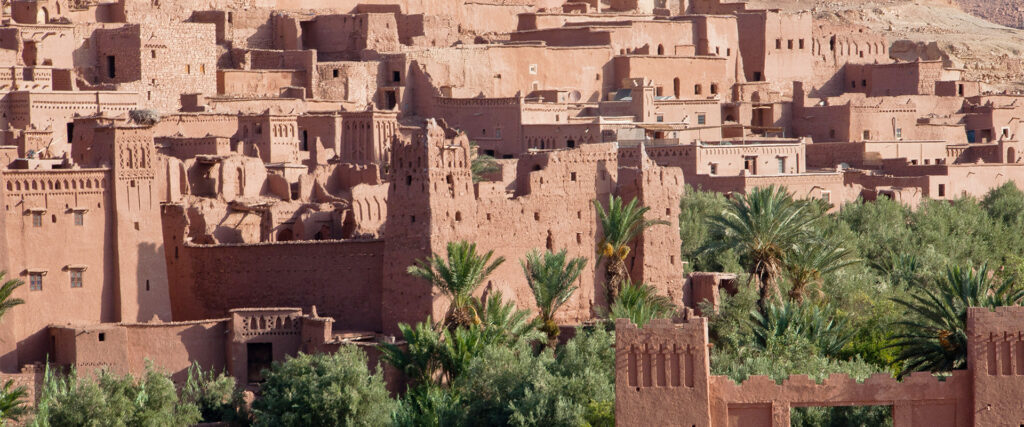
There was, therefore, a mosaic of peoples and territories. This diversity remains essential for understanding the Amazigh world. We are not dealing with a uniform block, but with a group of societies rooted in very different geographies: mountains, plains, oases, steppes, towns, caravan routes and Saharan spaces.
The role of medieval Arab authors
The use of the word “Berber” was later consolidated in medieval Arab sources, in the form al-Barbar. After the Arab conquests in North Africa, Arab authors used this term to designate the indigenous populations of the Maghreb, in all their diversity.
From this period onwards, the word gradually became a more precise historical category. It made it possible to refer to the non-Arab populations of North Africa, with their languages, tribes, dynasties, alliances and forms of resistance.
One of the great names associated with this history is Ibn Khaldun. In his immense historical work, he gives an important place to the Berbers and their dynasties. His perspective remains that of a medieval author, with the categories and genealogical narratives of his time. Yet his work remains an essential source for understanding the place of Berber populations in the history of the Maghreb.
Here again, nuance is needed. Arab authors did not merely transmit a word. They also organised a way of thinking about North African history. By bringing different populations together under the term “Berbers”, they helped to construct a major historical category. This category then passed through the centuries into modern European languages.
From Barbary to the Barbary Coast
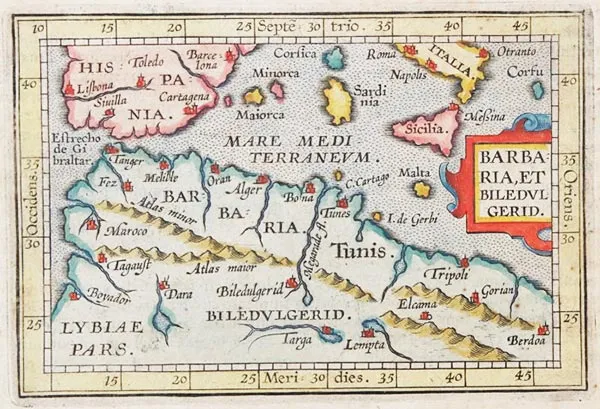
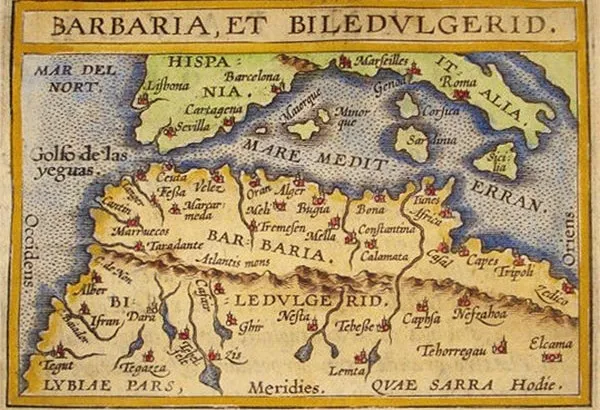
From the early modern period onwards, Europeans frequently used the word “Barbary” to designate the coastal regions of the Maghreb, between present-day Morocco, Algeria, Tunisia and Libya. On old maps, in travel accounts and in diplomatic texts, the expression “Barbary Coast” also appears.
This term belongs to an old European geography. It does not refer only to Berber populations. More broadly, it designates a North African space perceived from Europe, often through commercial, diplomatic, military or maritime relations.
The “Barbary Coast” is also associated with corsair activity in the Mediterranean and the Atlantic. Ports in the Maghreb played an important role in these activities, especially during the early modern period. But it would be reductive to make this maritime history the heart of Berber or Amazigh identity. The word “Barbary” mainly tells us how Europe long named and imagined the Maghreb.
It is therefore better to see this part of the story as a later extension of the word, not as its deeper meaning. It shows how a name can travel, change scale, and take on new representations, sometimes far removed from the peoples it claims to describe.
Amazigh, Imazighen, Tamazight: the words from within
Set against the word “Berber”, which comes from a long external history, the word “Amazigh” holds a special place. In the singular, one speaks of an Amazigh. In the plural, of Imazighen. The term Tamazight may refer to the Amazigh language, or more broadly to the whole range of Amazigh languages and varieties, depending on the context.
The use of the word “Amazigh” points to an internal designation. It is not simply a modern replacement for the word “Berber”. It is a word through which an identity speaks, recognises itself and is transmitted.
Amazigh is often translated as “free man” or “noble man”. This interpretation is very widespread, but it should be used with caution. Specialists remind us that the exact etymology remains debated. It is therefore better to say that the word Amazigh is traditionally associated with ideas of freedom, nobility or dignity, rather than to treat these as a simple and definitive definition.
The essential point lies elsewhere: “Amazigh” has become a central word in movements of cultural, linguistic and identity recognition. It makes it possible to name the peoples concerned otherwise than through a term inherited from Greek, Latin, Arab or European viewpoints.
In contemporary Morocco, Tamazight has been recognised as an official language since the 2011 Constitution. This recognition does not sum up the entire Amazigh reality, which extends far beyond Morocco’s borders. But it marks an important change: Amazigh language and culture are no longer regarded merely as a local or rural heritage; they are recognised as an essential component of national identity.
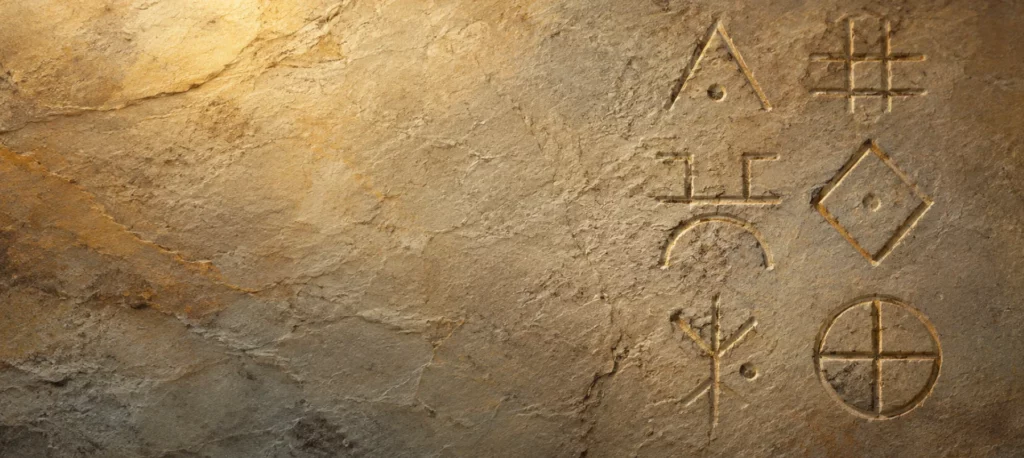
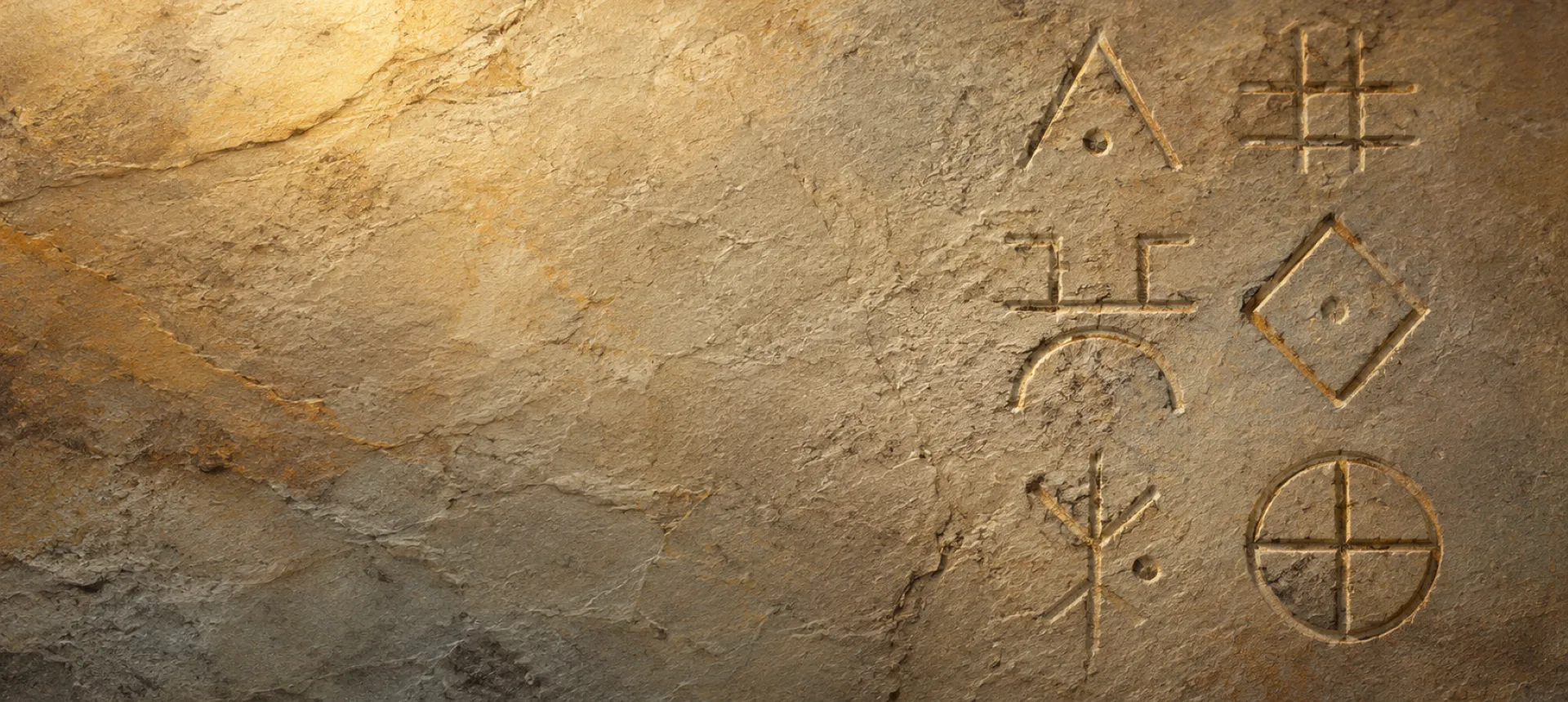
Read also : Tifinagh: from stone to digital, the living alphabet of the Amazigh world
Should we say Berber or Amazigh?
The question often arises: should we still use the word “Berber”, or should we prefer “Amazigh”?
The answer cannot be purely linguistic. It also depends on the context, on the reader being addressed, and on the kind of gaze one wishes to adopt. Internationally, especially in English, the word “Berber” remains very widely used. It appears in encyclopaedias, historical works, linguistic classifications, museum catalogues, cultural tourism and online searches.
For many readers outside the Maghreb, this is still the word through which discovery begins.
The dominance of the word “Berber” can be explained by the long history of European languages, but also by habits of search and recognition. On the Internet, a term that is already established continues to guide usage. Readers often type the word they know, even if it is imperfect. Search engines, publishers, media outlets and tourist websites then prolong this usage because it remains the most immediately understood.
But visibility does not tell the whole story. “Berber” is a name that came from outside. It belongs to a long history of designations given by others: Greeks, Romans, Arab authors, European travellers, colonial administrators, scholars, cartographers. In European languages, the word eventually came to designate a vast ensemble of peoples, languages and cultures of North Africa. But it did not first come from those it names.
“Amazigh”, by contrast, belongs to another movement. It refers to a way of speaking from within. To use the word “Amazigh” is therefore not merely to change vocabulary. It is to recognise a voice, a memory and an identity that are not defined only by the outside gaze.
Should the word “Berber” therefore be banned? Not necessarily. The word remains useful, especially in history, bibliography, transmission and international referencing. It remains a point of entry. But it should be accompanied, explained and placed back within its history.
To say “Berber” without knowing where the word comes from can repeat an old gaze. To say “Berber” while explaining “Amazigh” can instead open a door: the door that leads from the name given by others towards the name carried by the peoples themselves.
A reality larger than Morocco
To speak of the Berber or Amazigh world is not to speak only of Morocco. Amazigh populations are present across a vast part of North Africa and the Sahara: Morocco, Algeria, Tunisia, Libya, Mauritania, Mali, Niger, Egypt, as well as in diasporas, especially in Europe.
This wider geography is essential. It helps us avoid a frequent reduction: associating the Amazigh world with a few decorative signs, a few mountain villages, or a tourist image of Morocco. The Amazigh world is far broader. It runs through languages, forms of dwelling, music, crafts, political memories, caravan routes, Saharan spaces and Mediterranean histories.
The Amazigh languages themselves are multiple. Tachelhit in southern Morocco, Tarifit in the Rif, Tamazight of the Middle Atlas, Kabyle, Chaoui, Mozabite, Nafusi and the Tuareg varieties are not mere folkloric variants. They belong to a large linguistic family, with strong regional histories.
This diversity requires precision. There is not one uniform “Berber world”, but rather Amazigh worlds. They share heritages, linguistic structures, symbols and memories, but they are not identical. Their richness lies precisely in this plurality.
What a name reveals about history
The history of the word “Berber” reminds us that a name is never just a word. It carries with it centuries of perceptions, translations, misunderstandings and sometimes domination. It can simplify an immense reality. It can also make it visible.
Behind this term, familiar to French- and English-speaking readers, there is not one uniform people, but a constellation of societies, languages, territories and memories. From the Atlas Mountains to Saharan oases, from Kabylia to the Rif, from the Souss to the Tuareg world, the Amazigh worlds cannot be reduced to one single history or one single geography.
Understanding the origin of the word “Berber” is therefore not only about correcting an etymology. It is about learning to look more carefully. It means moving from an inherited name towards a wider history, in which the word “Amazigh” reminds us that peoples are never only what others have said about them. They are also, and first of all, what they say about themselves.
Read also : Tifinagh: from stone to digital, the living alphabet of the Amazigh world
Key points
- The word “Berber” comes from a long history of external designations, from the Greek barbaros and the Latin barbarus to Arab and European usage.
- The word “Amazigh”, plural Imazighen, refers to an internal designation, now central to the cultural and linguistic recognition of Amazigh peoples.
- “Berber” remains widely used internationally, especially in English. It is a useful point of entry, but it needs to be explained.
- “Amazigh” shifts the gaze: it is no longer only a matter of naming from the outside, but of recognising an identity that speaks from within.